Advertisement
India
This Week in AsiaPolitics

India’s BJP set to ‘whip up’ Hindu nationalist sentiment with Ayodhya temple campaign

  • The BJP has led a campaign to build a temple in Ayodhya since riots in 1992 in which a mosque there was destroyed and thousands of mostly Muslims died
  • Analysts says it’s ‘a matter of time’ before other mosques give way to Hindu temples, with the ruling party timing it ‘to suit them most politically’

Reading Time:4 minutes
Why you can trust SCMP
4
Indian Prime Minister Narendra Modi waves to crowds before inaugurating a new airport and railway station in Ayodhya on Saturday. A new Hindu temple on a disputed site in the city will be opened on January 22. Photo: AP
Biman Mukherji
Braving thick fog, Indian Prime Minister Narendra Modi visited Ayodhya over the weekend to launch an airport, train services and roads, giving a US$1.8 billion boost to the ancient city in northern Uttar Pradesh before the January 22 inauguration of a Ram temple at a disputed site.
Modi’s visit in the face of bad weather – which disrupted traffic across north India, with hundreds of flights and dozens of trains delayed, and several deaths in road traffic accidents – symbolised his ruling Bharatiya Janata Party’s determination to fulfil a key pledge to the country’s majority Hindu population ahead of crucial national elections in April and May.

The campaign to build a temple to Lord Ram, the deity also known as Rama who devotees believe was born in Ayodhya, has been at the centre of a three-decade campaign by the BJP. In 1992, Hindu mobs razed a mosque at a site in the city where they say a temple had earlier existed.
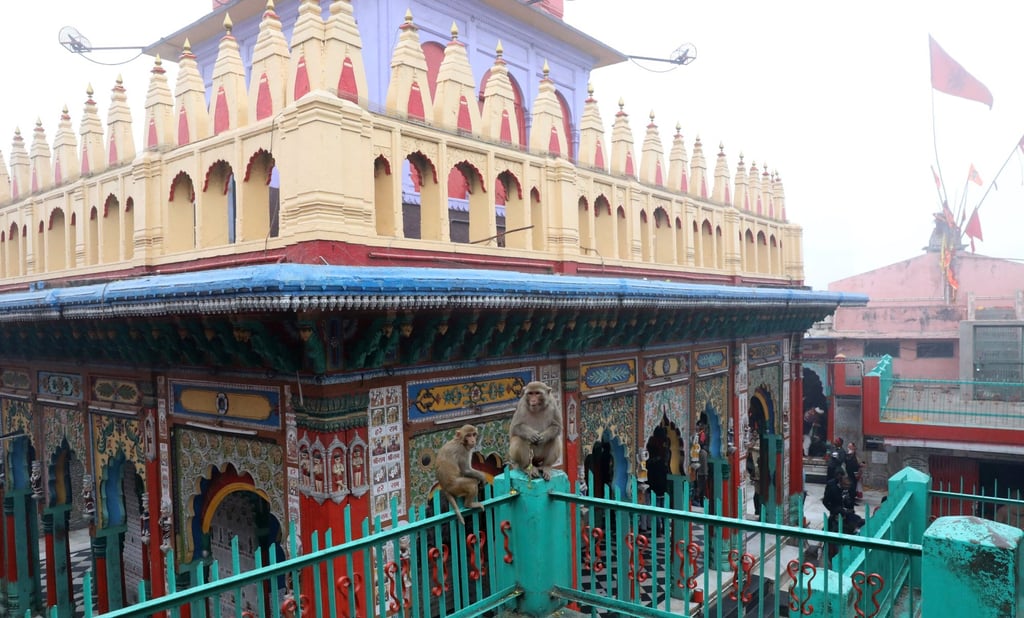
The Hindu temple in Ayodhya, believed to be the birthplace of Lord Ram, is due to be inaugurated by Indian Prime Minister Narendra Modi on January 22. Photo: EPA-EFE
Nearly 2,000 people were killed in the nationwide riots that followed, mostly Muslims. After years of legal wrangling, the Supreme Court in 2019 allowed the Hindu community to build a temple at the disputed site and allocated a separate plot for rebuilding the mosque.
Advertisement

“There was a time when, in this very Ayodhya, Lord Ram was kept inside a tent. Today, a permanent house has been built for not only Lord Ram but also for 40 million [shelterless] Indians,” Modi told a packed gathering at the weekend, many people waving flags emblazoned with Ram’s image.

The prime minister’s reference to permanent homes relates to concrete ones built for the poor, highlighting his government’s development work.

Modi urged Indians to light up their houses during the temple’s inauguration, in the same way Hindus celebrate Diwali, the annual festival of lights, which markd Ram’s return from exile to his Ayodhya home after defeating his evil adversary Ravan.

Advertisement
Select Voice
Choose your listening speed
Get through articles 2x faster
1.25x
250 WPM
Slow
Average
Fast
1.25x