Advertisement
Does Japan firm’s Korean forced labour payout set an example? ‘Hitachi Zosen is betraying the nation’
- Critics say Hitachi Zosen’s depositing of funds earmarked for forced labour compensation with a Korean court breaks with Japan’s position on the issue
- Tokyo continues to instruct Japanese companies not to compensate claimants – even if it one day means the seizure of their assets in South Korea
3-MIN READ3-MIN
4

A major Japanese company has been accused of “betraying the nation” after transferring funds earmarked as compensation for a victim of forced labour to a South Korean court, in defiance of a government directive.
Hitachi Zosen Corp, an Osaka-based industrial and engineering firm, lost a compensation lawsuit in 2019 brought by an unnamed former labourer who was requisitioned during Japan’s colonial control of the Korean peninsula, between 1910 and the end of World War II in 1945.
The company, which was set up in 1881, built a variety of ships for the Japanese military immediately before and during the war, including minesweepers, landing craft and transport submarines.
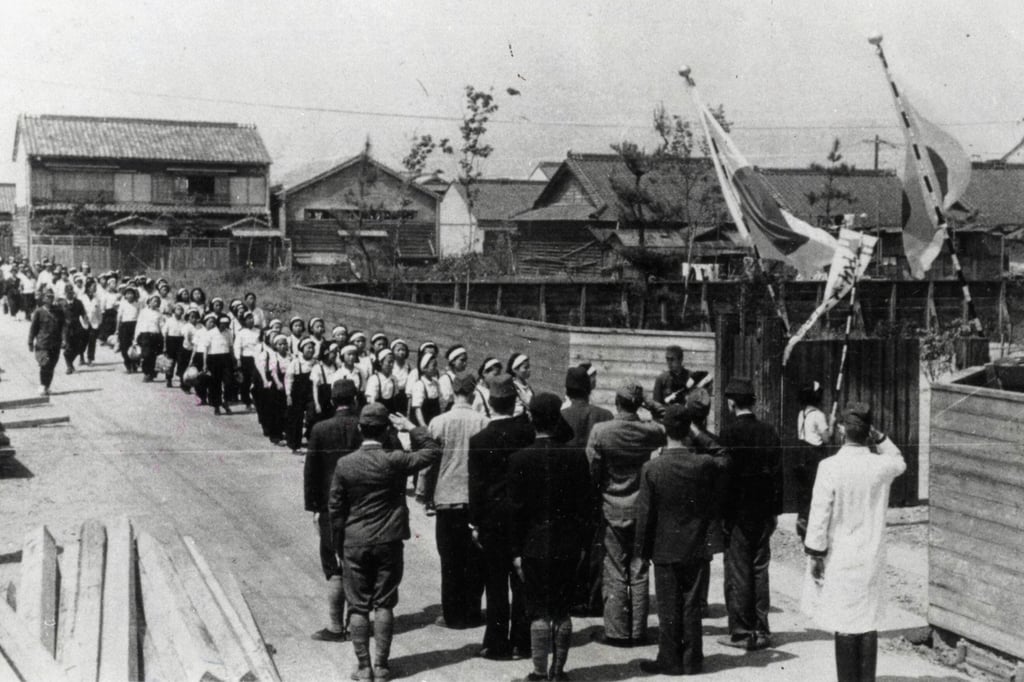
After losing the case, Hitachi Zosen deposited about 6.6 million yen (US$46,230) with the court, the Yomiuri newspaper reported, as a security to prevent the seizure and liquidation of company assets in South Korea to compensate the former labourer – even though appeals were ongoing.
Advertisement
South Korean’s Supreme Court last week upheld the lower court’s ruling and ordered Hitachi Zosen to pay the plaintiff 50 million won (US$38,150). With all legal challenges now exhausted, the plaintiff has indicated that he intends to collect the funds soon, his lawyer said.
The top court also recently ordered two more Japanese companies – Mitsubishi Heavy Industries Ltd and Nippon Steel Corp – to compensate workers for forced labour, after turning down their appeals.
Korean courts have previously ruled that the assets of Japanese companies can be seized to compensate former forced labourers, but Hitachi Zosen is the only company known to have transferred funds. This is despite the Japanese government repeatedly stating that the Korean courts were ruling in contravention of a 1965 treaty that normalised diplomatic relations between the two countries and saw Tokyo pay US$500 million in compensation to Seoul for its decades of often brutal colonial occupation.
Advertisement
Advertisement
Select Voice
Select Speed
1.00x