South Korea faces pressure to save dogs, compensate breeders as it winds down meat trade
- A new ban on breeding and butchering dogs will take effect in 2027, and activists say some half a million dogs still face being slaughtered in the meantime
- Dog meat traders on the other hand are demanding up to US$300 per dog over the next five years in exchange for shutting down their businesses

South Korea has outlawed dog meat, but it is only the first step in winding down the trade as officials mull how to deal with some half a million dogs that remain caged and the high compensations demanded by breeders and vendors.
The country’s parliament earlier this month banned the breeding and butchering of dogs for consumption on pain of up to three years in prison or a 30 million won (US$22,000) fine, following years of public debates and pressure by animal activists.
Activists welcomed the move as a milestone for animal rights, but urged the government to work as quickly possible to free the hundreds of thousands of dogs that will continue to be slaughtered until 2027, when the law takes effect.
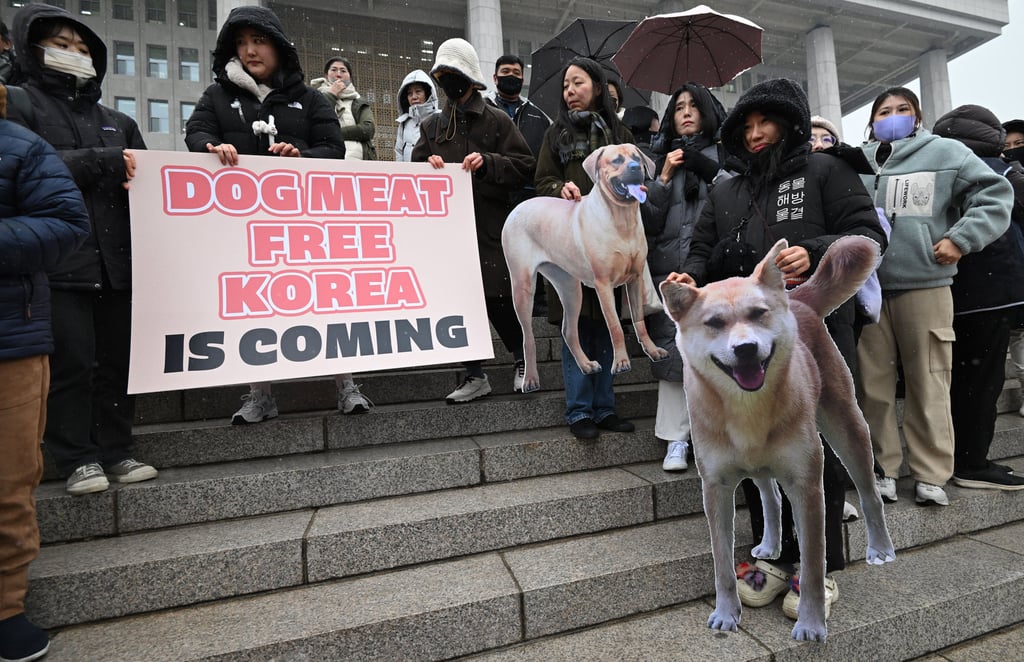
Dog meat traders claim the ban is an attack on personal freedoms and have criticised the law’s vague definitions on the size of compensations for farmers.
“It’s an evil, extra-constitutional law that takes away people’s right to eat, which is a basic right stipulated in the constitution,” said Joo Yeong-bong, head of the Korean Association of Edible Dogs, a coalition of breeders and sellers.
“It’s like forcing us out in the cold. We’re going to do everything we can to push for fair compensation,” he added.
In April 2022, South Korea’s agricultural ministry estimated that 1,100 farms were breeding 570,000 dogs for consumption in 1,600 restaurants.