Ahead of key elections, India’s opposition struggles to play catch-up amid low visibility, poor messaging
- Congress has struggled to gain voter attention in the past decade, with party renewal hampered by the old guard and a lack of clear policy goals among issues
- Large sections of the population also view the Gandhi family as elitist, analysts say, amid the ruling BJP’s social media campaign to ramp up discontent

The contrasting temple visits starkly underscores the chasm between Modi’s Bharatiya Janata Party (BJP) and Congress as the country heads into elections this year, marking the opposition’s uphill task ahead to win voters’ attention.
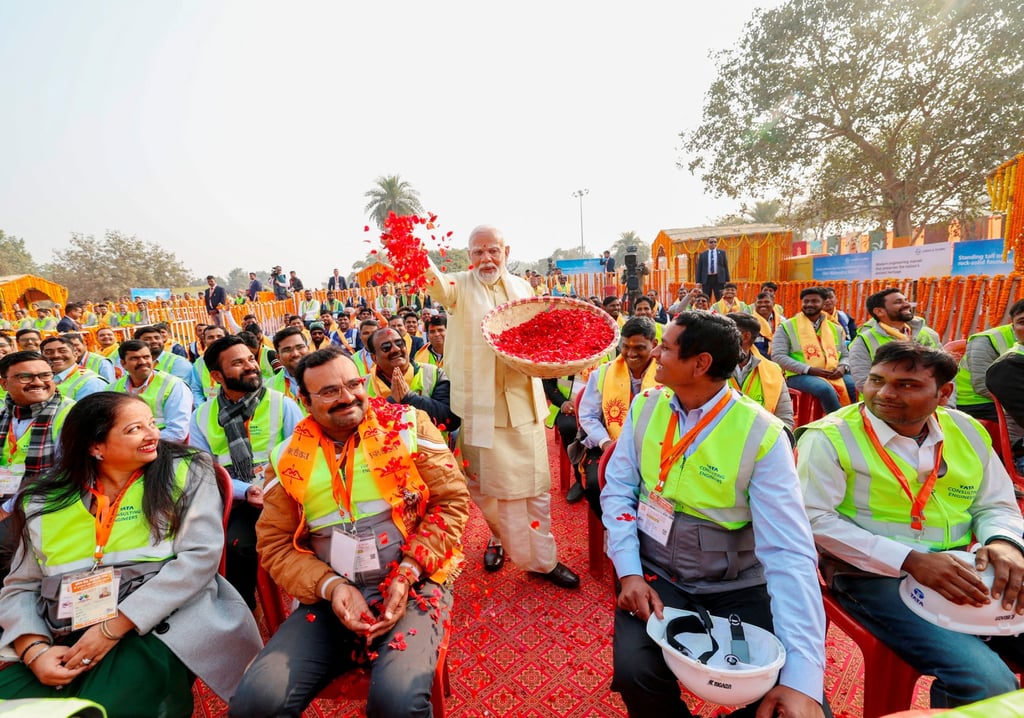
“The ceremony was planned so that Modi was presented as the prime minister and the head priest, indeed Ram himself as he promised a Ramrajya [an ideal ruler according to Hindu tenets]. The camera followed him everywhere, ensuring he remained the central figure,” said Smita Gupta, an independent political commentator.
Throughout the Ayodhya ceremony, TV channels were replete with commentaries about Modi’s fasting ritual of sleeping on the floor and staple diet of coconut water, rituals meant to cleanse the body before consecrating an idol of Hindu god Ram.
Ram, the hero of an ancient epic, is believed to be an incarnation of Vishnu, one of the principal deities of Hinduism.
“Modi’s objective was clearly to present himself as a 21st century Ram, who will create a Ramrajya; he will be both god and prime minister. He doesn’t simply want to be respected; he wants to be worshipped,” Gupta said.