Advertisement
Japan
This Week in AsiaPolitics

Japan adds Indonesia to ‘network of navies’ after Australia, Philippines

By exporting warships, analysts say Tokyo is sidestepping military pacts to bind partners through shared hardware

4-MIN READ4-MIN
2
Listen
Japan’s Defence Minister Shinjiro Koizumi (right) and his Indonesian counterpart Sjafrie Sjamsoeddin inspect an honour guard ceremony before a meeting in Jakarta on May 4. Photo: EPA
Maria Siow
Indonesia sits at the confluence of the world’s busiest sea lanes. Its coastline stretches nearly 55,000km (34,000 miles) and its waters encompass the Malacca and Lombok straits, chokepoints through which trillions of US dollars in global trade pass annually.

Yet for years the nation’s navy has lacked the subsurface awareness to monitor, let alone counter, what moves beneath the waves.
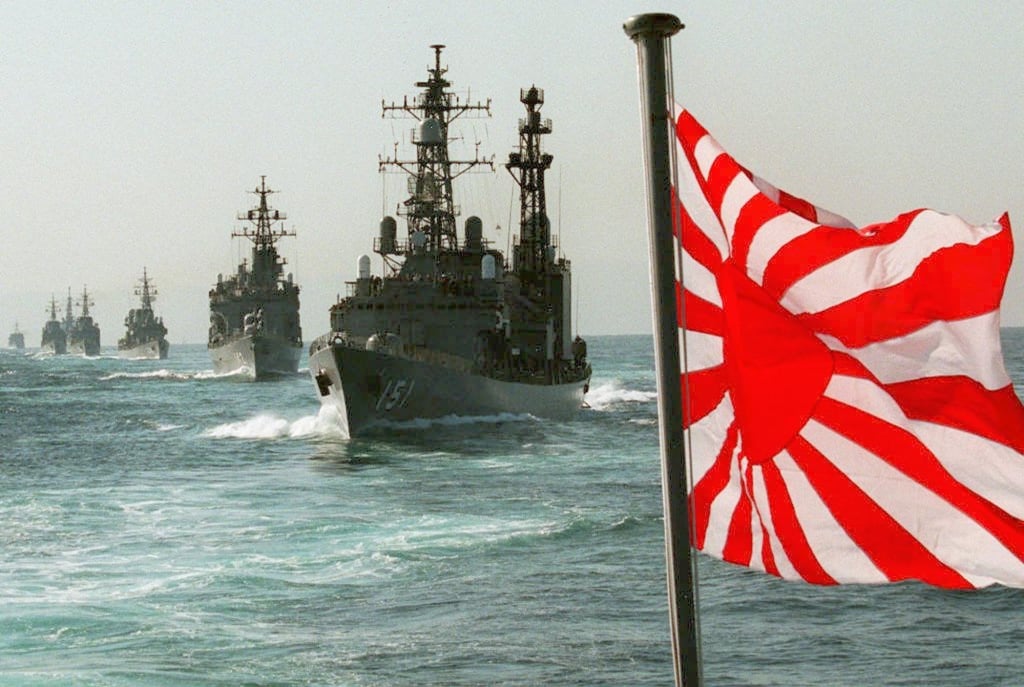
Japan intends to change that. Tokyo confirmed on June 5 that the two countries had agreed to begin formal talks on the possible transfer of Asagiri-class destroyers to the Indonesian Navy, following a meeting between their defence ministers, Shinjiro Koizumi and Sjafrie Sjamsoeddin.
The JS Asagiri, lead ship of Japan’s Asagiri-class destroyers, heads a fleet review in Sagami Bay in 1997. Photo: AFP

A working-level framework established in May is set to guide discussions on training, maintenance and operational integration.

Advertisement

Koizumi reportedly said afterwards that the transfer of destroyers “will expand substantive collaboration”, describing it as “a solid step towards contributing to peace and stability in the Indo-Pacific region”.

Sjafrie, for his part, expressed a desire to formalise and “give concrete shape” to defence equipment cooperation with Japan, specifically through the transfer of the decommissioned Asagiri-class destroyers.

‘Eyes and ears’

Indonesia’s interest in acquiring Japan’s Cold War-era destroyers – specifically optimised to hunt and destroy enemy submarines – comes as heavily armed Chinese coastguard ships have repeatedly been observed in recent years escorting commercial fishing fleets inside Indonesia’s exclusive economic zone (EEZ) in the North Natuna Sea.
Advertisement
Select Voice
Select Speed
1.00x