As Emperor Akihito prepares to abdicate, is it bye-bye Tokyo, hello Kyoto?
Japan’s ancient capital is hoping to recreate its long-lost court culture

It has been nearly 150 years since the emperor of Japan had his official residence in Kyoto, but the city still knows a thing or two about hosting royalty. And that’s just as well as, if a political party based in the city has its way, the nation’s ancient capital will host the household of Emperor Akihito after his abdication from the Chrysanthemum Throne.
The Japanese government in May approved legislation that will permit the 84-year-old emperor to step down and be replaced by his oldest son, Crown Prince Naruhito, with his formal abdication likely to take place on December 31, 2018, or the following day.
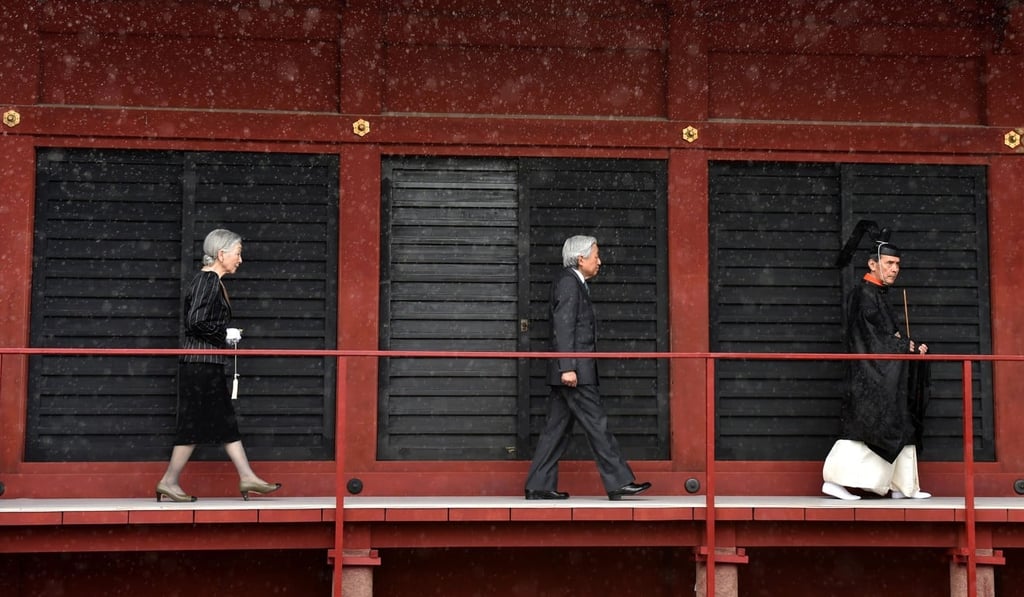
The emperor, who has reigned since the death of his father Emperor Hirohito in January 1989, underwent surgery for prostate cancer in 2003 and was admitted to hospital again in late 2008. He has made clear his own desire to step down from the pressures of the position.
The vast majority of Japanese support that desire and, now it has been decided, the question turns to his role and responsibilities for the rest of his life.
It has been suggested it would benefit the Imperial family if Akihito and his wife, Empress Michiko, left Tokyo and gave his successor space in which to forge his own role. Naruhito, as emperor, would remain in Tokyo.