After Shimmoe, is Japan’s Mount Fuji about to blow?
The iconic mountain is overdue a blowout, at least on some experts’ estimates. And the apparently connected eruptions of two other peaks have some worried there’s no smoke without fire

When Japan’s Mount Io erupted in mid-April, even the experts were caught by surprise. The peak, one of a series of volcanoes on the borders of Miyazaki and Kagoshima prefectures on Kyushu, belched ash more than 500 metres into the sky and local disaster prevention authorities swiftly lifted the five-stage alert level to three, warning people to stay well away.
Plumes of gas and steam could be seen rising from the crater and experts identified routes that pyroclastic flows were likely to take down the flanks of the mountain should lava begin to seep from vents in the earth’s crust.
When the nearby Mount Shimmoe also erupted a little over a week later, smoke and ash rose to a height of nearly 5km above the peak, large rocks were flung several kilometres from the mouth of the volcano and local rice farmers gave up efforts to grow crops this year.
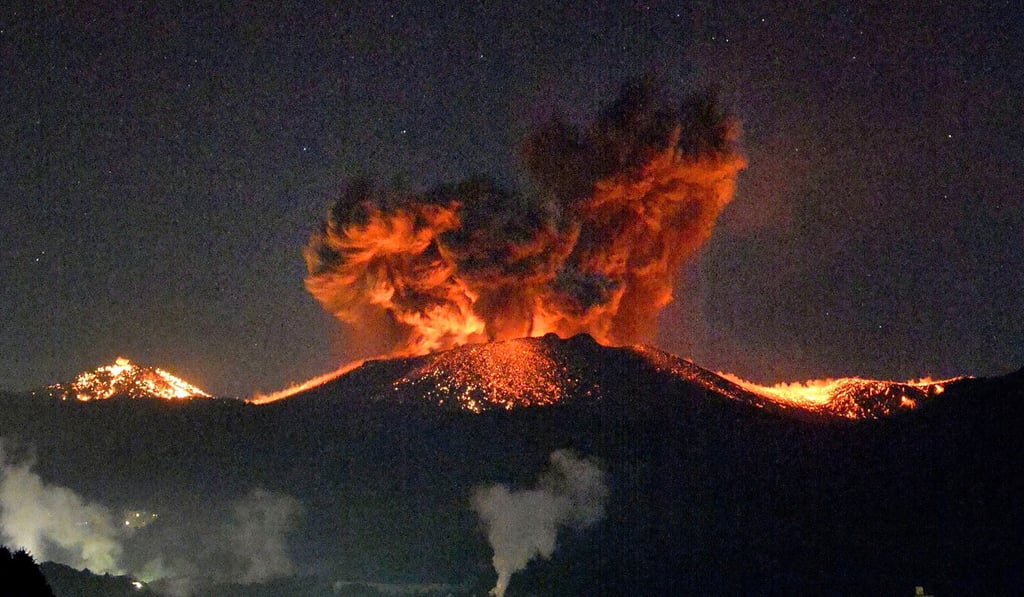
Arguably the most worrying aspect of the apparently related eruptions, however, is that Mount Io had been dormant since 1768. The experts point out that Mount Fuji, Japan’s most iconic mountain and the subject of countless postcard images of the nation, is similarly considered “dormant” – it last erupted in 1708.
Given that was a mere 60 years before Mount Io’s previous eruption, a heartbeat in terms of volcanology, there is a growing awareness that Mount Fuji’s next eruption is inevitably coming closer.