Why South Koreans are trapped in a lifetime of study
- On Thursday, 590,000 high school students took South Korea’s Suneung national college entrance exam
- But for most, even after the ‘life-defining’ test, the flurry of textbooks and stress never ends

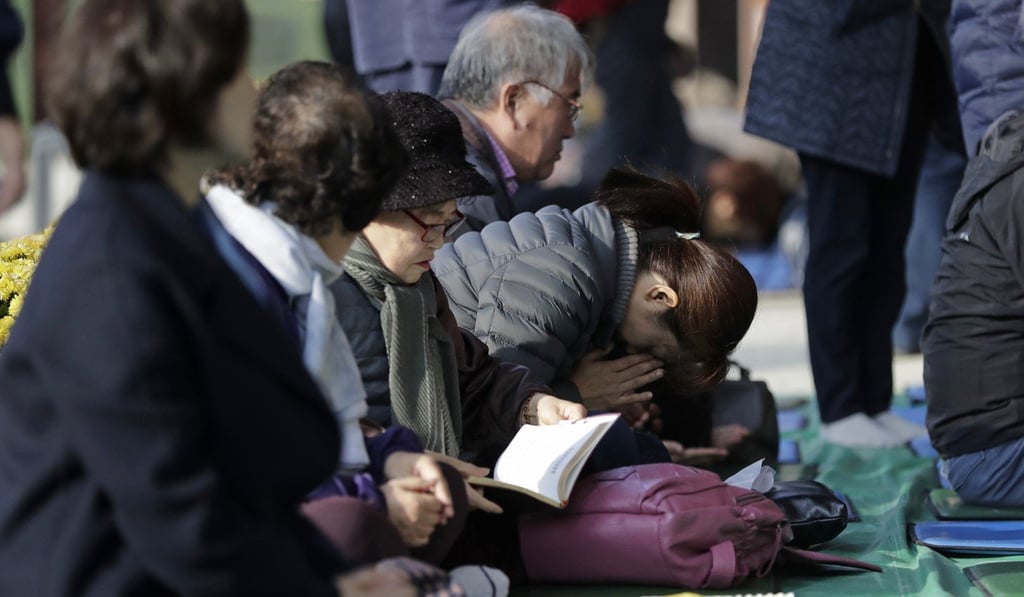
South Korea’s annual Suneung examination is a big deal – so big it has repercussions for the whole country.
On Thursday, when the exam was held, aeroplanes took alternate routes to reduce noise, the country’s banks and financial markets started trading later than usual, and buses and subways increased their frequency – all to facilitate smoother traffic and a calmer environment for the 590,000 high school students who took the marathon nine-hour exam, according to Yonsei News.
“Suneung” is a Korean abbreviation for the country’s “life-defining” College Scholastic Ability Test, a standardised national university-entrance exam often likened to a Korean version of the American SATs.
The exam included tests on subjects such as Korean geography, ethics and thought, law and politics, world history, and countless other topics. Achieving a high score is a testament not only of one’s academic abilities, but also a mark that seemingly defines the entire course of a South Korean’s destiny.
Young people spend the first 25 to 30 years of their life studying, and when they move into the real world and realise life is not a multiple choice test ... that’s already a mid-life crisis
Students begin studying for Suneung from as early as 13 or 14, during their first year of high school, attending extracurricular study academies and cram schools for hours each day after their regular classes – up to 16 hours of studying each day. Many dream of entering Korea’s top-tier “Ivy League” universities: Seoul National University, Korea University and Yonsei University, often referred to by the acronym “SKY”.
Among the hundreds of thousands who take the exam, only 2 per cent will receive coveted offers to study at these universities, according to a BBC report. And while an estimated 70 per cent, according to the same report, will go on to study at other higher-learning institutions, this lifestyle of study continues long past their university days.
OVER-EDUCATED SOCIETY