Driven from Pakistan, Ahmadi Muslims find paradise. In the Marshall Islands
- In Pakistan, Ahmadis have been subjected to routine violence and discrimination and are not even allowed to call themselves Muslim
- But in a tiny corner of Micronesia they have finally found peace

Nestled along a backstreet behind the courthouse in downtown Majuro, capital of the Marshall Islands, is a mosque that looks like any other mosque in the world. A cinder block building, covered with a gabled roof that supports two minarets, its paint combining the cerulean blue of the lagoon and the white of the ocean waves. The Arabic inscription on the entrance proclaims the unity of God and the prophethood of Mohammed. A speaker sounds the call to prayer five times a day.
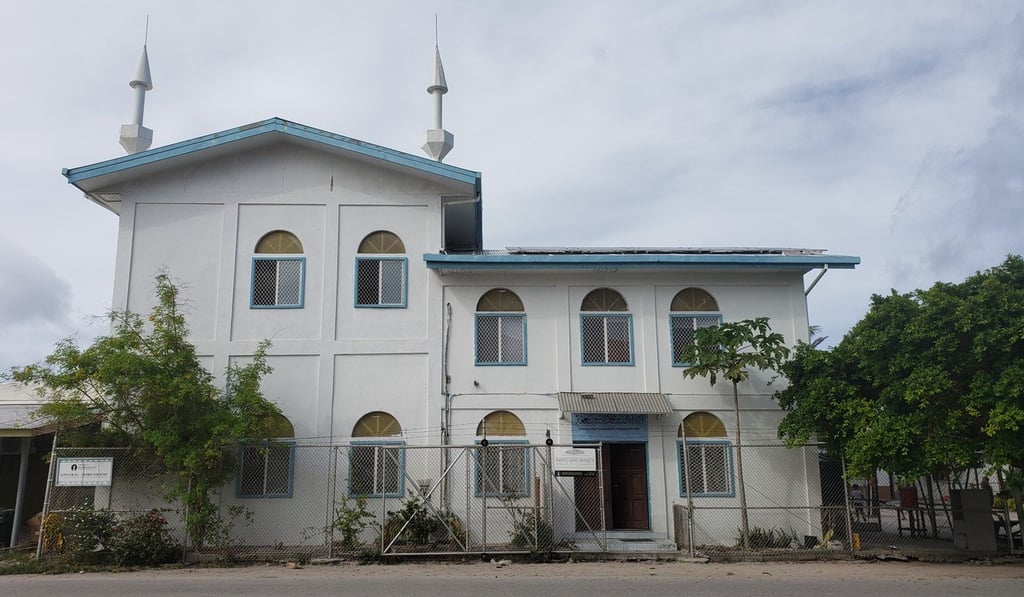
The mosque belongs to the Ahmadiyya Muslim community, an Islamic revivalist movement that has its origins in 19th century South Asia. The community considers its founder, Mirza Ghulam Ahmad, to be the promised messiah and a spiritual successor of the Prophet of Islam, challenging the majority belief in the finality of Mohammed’s prophethood.
Following the creation of Pakistan in 1947, the community moved its headquarters to Rabwah, a city in the province of Punjab. Religious extremists soon began attacking them, and in 1974, after decades of riots, Pakistan declared Ahmadis non-Muslim. Ten years later, it snatched from them the right to practice the religion, or ‘present’ themselves as Muslims by doing Muslim things – the only law of its kind in the world. They cannot say the Islamic greeting, cannot make their places of worship look like mosques. A violation can lead to a fine and a maximum of three years behind bars.
Since then, Ahmadis have been subjected to routine violence and discrimination in the country. In the summer of 2010, an Ahmadi mosque in the Pakistani city of Lahore was attacked. Nearly 100 were massacred and another 120 were injured.