Advertisement

Filipino-Americans alarmed by Trump’s remittance tax, lament ‘state extortion’

Filipino-American community leaders warn of long-term effects of Trump’s latest actions, including on remittances back home, state-funded health insurance

Reading Time:4 minutes
Why you can trust SCMP
A migrant worker walks along a field in Bakersfield, Central Valley of California in March. Observers say US President Donald Trump’s new tax fits a broader pattern in US politics of making immigration economically untenable. Photo: Reuters
A new tax on international remittances introduced under US President Donald Trump’s sweeping economic reform bill is drawing criticism from Filipino-American communities, who say the measure will hit working-class migrants hardest and threaten the livelihoods of their families in the Philippines.

Under the new law, green card holders and migrant workers will be charged a 3.5 per cent levy on overseas money transfers starting on January 1 – a move that analysts warn will carry far-reaching consequences in both countries.

“For decades, Filipinos in the US have often been in the top five countries for remittances … the fact that those [remittances] will be taxed now is going to have an impact on how much they receive on their end and their livelihoods in the Philippines,” said James Zarsadiaz, director of the Yuchengco Philippine Studies Programme at the University of San Francisco.

Advertisement

“It’s not just the Filipinos living here, but their family and their friends and their communities that rely on those remittances,” Zarsadiaz told This Week in Asia.
In 2024 alone, Filipinos in the US sent more than US$14 billion to the Philippines, making them one of the top sources of overseas remittances for the Southeast Asian country.
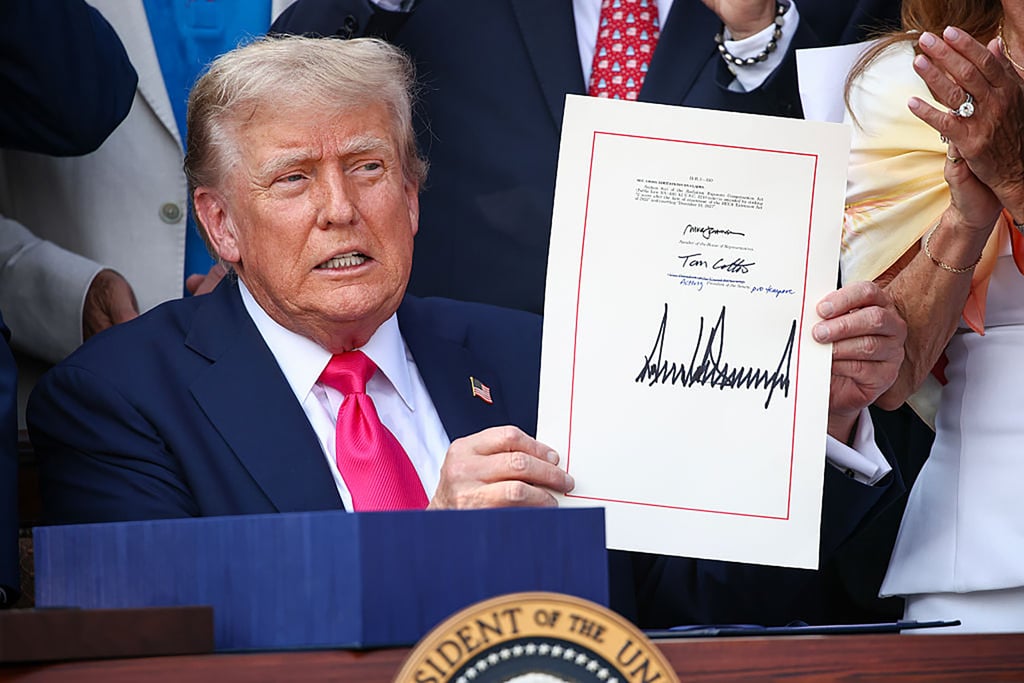
US President Donald Trump signs the One, Big Beautiful Bill Act into law on July 4 in Washington. Photo: TNS

Zarsadiaz said the new tax fit a broader pattern in US politics of making immigration economically untenable.

Advertisement
Select Voice
Choose your listening speed
Get through articles 2x faster
1.25x
250 WPM
Slow
Average
Fast
1.25x