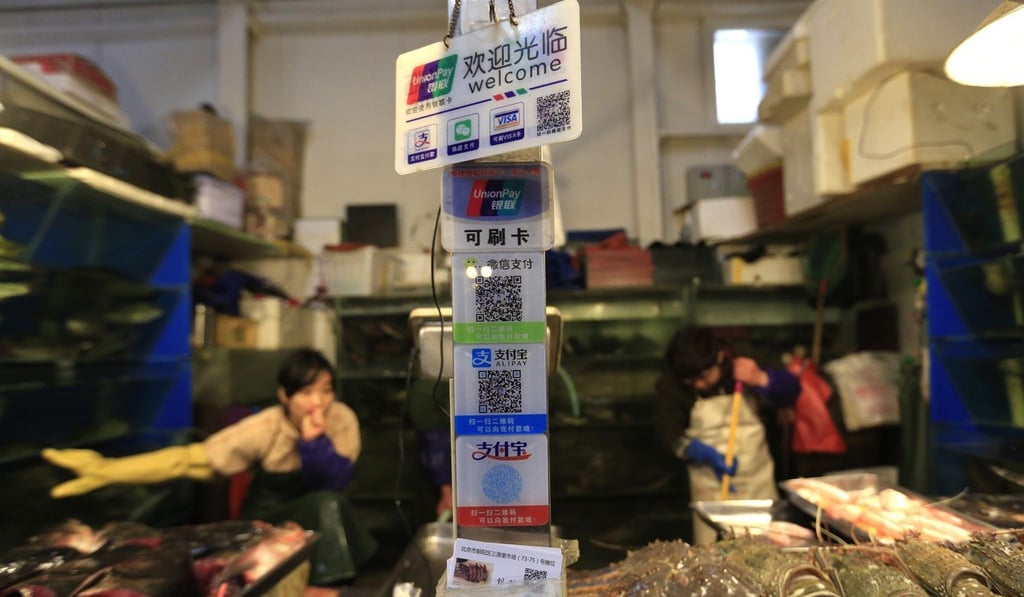
The rise of the QR code and how it has forever changed China’s social habits
It’s being used to encourage tipping at restaurants, receive cash gifts at weddings...even beggars are using it to collect handouts. The little barcode is driving China’s rapid shift towards a cashless society

On one of the hottest May days on record, Wang Jiarui walked out of school to see his grandfather, who had come to pick him up, standing in a sweat-soaked shirt.
The seven-year-old Beijing primary school pupil pointed at a nearby convenience store, proposing that his grandfather cool off with an ice-cold Coke. But the old man had forgotten his wallet.
No matter. Jiarui then took his grandfather’s smartphone and summoned to the screen a payment app with a QR code.
“He told me those black and white dots were money,” Jiarui’s grandfather, Wang Meng, recalled later, after that revelatory day in the heat.
“So I tried it [myself] and bought a pack [of cigarettes].”
With his mother’s permission, Jiarui helped his grandparents set up an account to let them buy things on the internet with a mobile phone using QR code scanning. He then showed them the technology could also work at a store counter just by presenting a QR code on the mobile phone to the cashier and letting them scan it to effect payment.