
Inside Out | Hong Kong, China in pole position to lead electric car revolution
With the right government policy in place, electric car ownership can be raised to Norwegian levels and the air we breathe transformed

Just when we thought a bit of good news was beginning to develop on how we are responding to the challenge of global warming, along comes unreformed, flat-Earth Trump to spoil the party.
But despite the shadow cast by the US president-elect’s love affair with fracking and fossil fuels, and his threat to withdraw the US from the Paris Climate Accord which took effect just two weeks ago, the progress being made to reduce our reliance on fossil fuels is taking many by surprise – and nowhere more so than here in China.
Even Hong Kong has rather flamboyantly joined the party – both symbolically by hosting, just a month ago, one of this year’s 12 Formula E races, and more materially by becoming one of the world’s biggest per-capita markets for electric cars. Surely Hong Kong is the perfect city for such a role.
We are witnessing a transformation of global power markets led by renewables
The International Energy Agency (IEA), in a clutch of recent reports, suggests that investment in renewable energy and the rise in generation coming from wind, solar, hydro and nuclear power is far outstripping even the most optimistic predictions of a decade ago. Oil and gas investment still accounts for the largest share of global energy investment – 45 per cent of a total US$1.8 trillion – but out of the US$400 billion spent on power generation, about two thirds went on renewables.
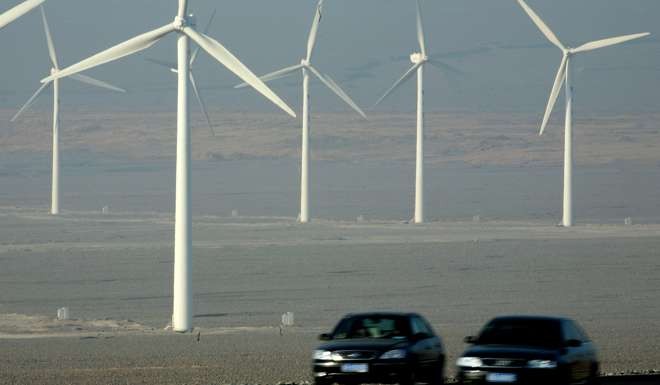
Noteworthily, much of the US investment was in oil and gas – in particular fracking – while the lion’s share in China was poured into renewables. According to the IEA, two wind turbines went up every hour in China last year. No wonder Fatih Birol, the IEA’s executive director, said: “We are witnessing a transformation of global power markets led by renewables.”
On the back of this surge in activity, the average generating costs for wind and solar power have tumbled at a pace that might soon put them on a par with conventional thermal power. The cost of electricity from new onshore wind farms fell 30 per cent between 2010 and last year, while the cost of power from large solar plants fell by two thirds. The IEA predicts that costs will continue to fall sharply between now and 2020, with a rising share of investment focused on renewables.
The note of caution – and the reason why Donald Trump’s shadow falls across the next four years – comes from the fact that much of this diversion of investment is due to government policy incentives, most important of all in China, the US, India and Mexico. A shift in incentives in the US could dent this encouraging progress.