
Opinion | China’s Silk Road ventures carry financial risks as well as political rewards
Cary Huang says “One Belt, One Road” may be a largely sensible strategy for China’s government but making investments in unstable regions clearly has its dangers

President Xi Jinping’s ( 習近平 ) “One Belt, One Road” programme could be thought of as “killing three birds with one stone”.
Economically, the initiative aims to help Chinese companies explore overseas markets along the ancient trade route that linked the Middle Kingdom with the larger part of Eurasia, formally established during the Han dynasty. The programme is also an effort to tackle overcapacity in many industries at home, nurture domestic structural reform and boost growth.
Politically, China needs true friends and political allies to offset its ideological isolation in a post-cold-war world, following the demise of socialism in the early 1990s. Beijing wants to resume its leadership status in the developing world through reviving the once widely known non-aligned movement.
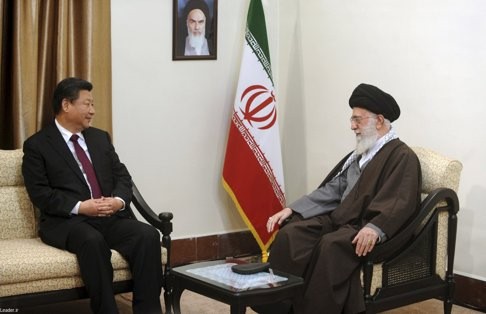
Beijing has dramatically scaled up its loan book to foreign nations
Armed with more than US$3 trillion in foreign reserves, Beijing has dramatically scaled up its loan book to foreign nations, mostly developing economies that are largely ignored by international investors and Western lenders.
Xi’s recent whirlwind trip to Iran, Saudi Arabia and Egypt was one such mission: his aim, to rebuild the “Silk Road” routes while also seeking to promote China’s image and influence as a global power.