Can China really buy its way to global cultural influence via the soccer pitch?
Emanuele Scimia says its huge investment in Europe’s clubs, in a bid to become a powerhouse in the sport, underlines a far bigger dream

China is set to get its hands on one of the most iconic soccer teams in the world, thus writing a new chapter in its bid for global prominence. Last week, Sino-Europe Sports Investment Management Changxing Company, a financial vehicle grouping together Chinese public and private investors, sealed a preliminary contract to buy AC Milan, Italy’s multi-titled soccer side owned by former Italian prime minister Silvio Berlusconi. The final contract is expected to be completed by the end of this year and is worth €740m (HK$6.4 billion), including debt of €220m.
This time for real: Xi Jinping’s vision for China football has galvanised stakeholders
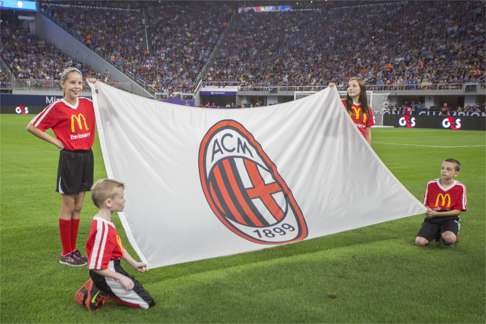
In the top league: What’s behind the rush of Chinese firms into the global sports business?
In cultural terms, China lags far behind the US (and the West in general), whether Beijing likes it or not
European soccer is one of the most remarkable success stories of the entertainment industry, along with cinema, TV, music and video gaming. Among sport events, only the US National Basketball Association has the appeal to compete globally with soccer’s draw. Nonetheless, many European entrepreneurs, like Berlusconi, who have been nurturing this “magical creature” over the past 30 years, are now in retreat, persuaded that it is just not worth the trouble in terms of business prospects.
And the Chinese league’s lavish hoarding of players in Europe and South America, inflating the soccer transfer market worldwide, has further contributed to the great escape of European tycoons from this sporting venture.
Financial overcapacity, expectations of high revenues and, perhaps, some capital flight can explain only in part Chinese public and private enterprises’ decisions to channel vast amounts of money into the European soccer circus. In reality, this move underlines Beijing’s attempt to challenge America’s cultural monopoly across the globe and to win the hearts and minds of a world audience.
China could rival the US both economically and militarily down the line. It could even narrow their gap in technology and innovation capacity. But, in cultural terms, China lags far behind the US (and the West in general), which remains the compass orienting tastes, styles and trends around the world, whether Beijing likes it or not.