
When will Beijing have the courage to mark June 4 and other tragedies of its own making?
Cary Huang welcomes Beijing’s decision to commemorate Taiwan’s 1947 uprising, but what about the June 4 military crackdown and other Communist Party missteps?

Beijing’s decision to hold a series of high-profile events to commemorate the 70th anniversary of the “228 Incident”, in which thousands of Taiwanese were killed by China’s then Kuomintang government, is a welcome development, despite its ridiculous argument behind the decision.
At least 28,000 people, mostly native Taiwanese, were killed during the suppression of civilian unrest that started on February 28, 1947, two years before the KMT government retreated to Taiwan after losing a civil war on the mainland. The massacres were a prelude to wider purges of government opponents between 1949 and 1987, under martial law imposed by Chiang Kai-shek.
70 years on, Taiwan’s crushed uprising still echoes in Beijing and Taipei
The uprising in fact had little to do with Chinese communists. Instead, it marked Taiwanese people’s resistance to a corrupt regime and their struggle for autonomy. Remembrance of the uprising has become a rallying call for Taiwan’s pro-independence forces and helped to propel the rise of the pro-independence Democratic Progressive Party.
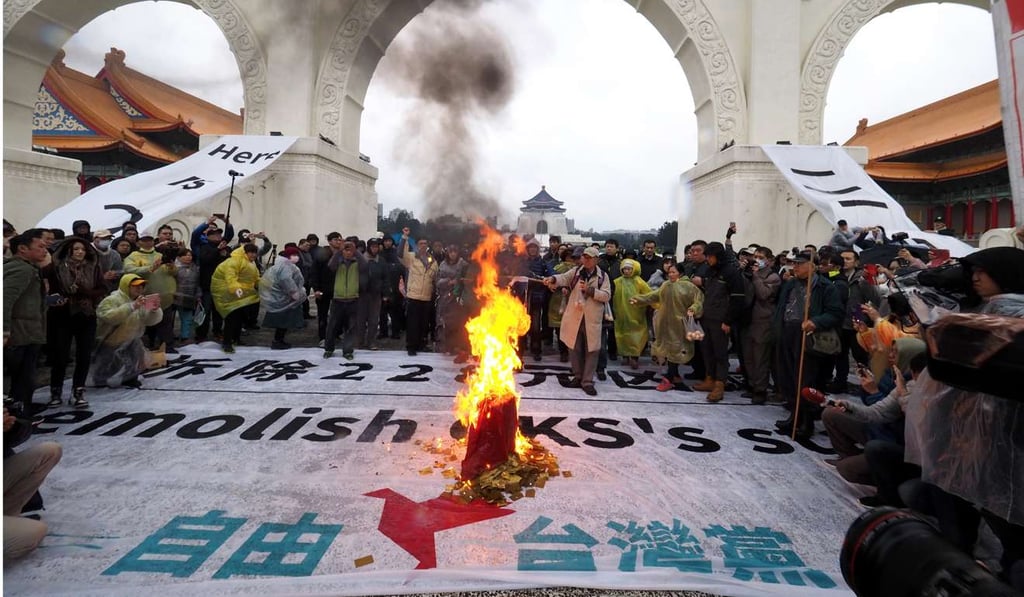
Beijing’s willingness to mark the event, thus highlighting an episode from the KMT’s dark past, may indicate its dissatisfaction with a KMT leadership it sees as inept. More broadly, it is also an attempt by Beijing to show it respects history, and to try to interpret it.
Beijing should know that reminiscing about the past may well remind people of the Communist Party’s own dark deeds
However, Beijing should know that reminiscing about the past may well remind people of the Communist Party’s own dark deeds. The party has a habit of trying to cover up the parts of its history that it fears may undermine its rule. Where are the events remembering the millions killed in Mao Zedong’s (毛澤東) continuous political purges between 1949 and 1966; the tens of millions who starved to death due to Mao’s policy failures in the 1950s; the tens of millions purged and the millions killed during the Cultural Revolution between 1966 and 1976; and, most recently, the bloody crackdown on pro-democracy students in Tiananmen Square on June 4, 1989?