Why Hong Kong’s food truck scheme is failing to get into gear
Mike Rowse says inept planning and limited reach have hamstrung the pilot scheme from the outset and, with its founding fathers now bowing out, it may be left to civil servants to tackle any debacle
It is said that success has many fathers, failure is an orphan. Who can be held responsible when the fathers of a scheme that starts to go sour leave office? I thought about this as news came through that a second food truck operator had dropped out without even getting on the road. Moreover, the minister responsible conceded that some of the locations selected by the government were less than ideal.
Hong Kong’s food truck scheme was launched by then financial secretary John Tsang Chun-wah in his 2015 budget speech; he had seen such arrangements working well in other countries. Tsang stepped down in November to run for chief executive. As the food truck idea had been presented as a tourism promotion item, the minister responsible for that sector, Gregory So Kam-leung, was put in charge of implementation. His term of office as commerce and economic development secretary expires at the end of this month, and he has indicated he will not stay on.
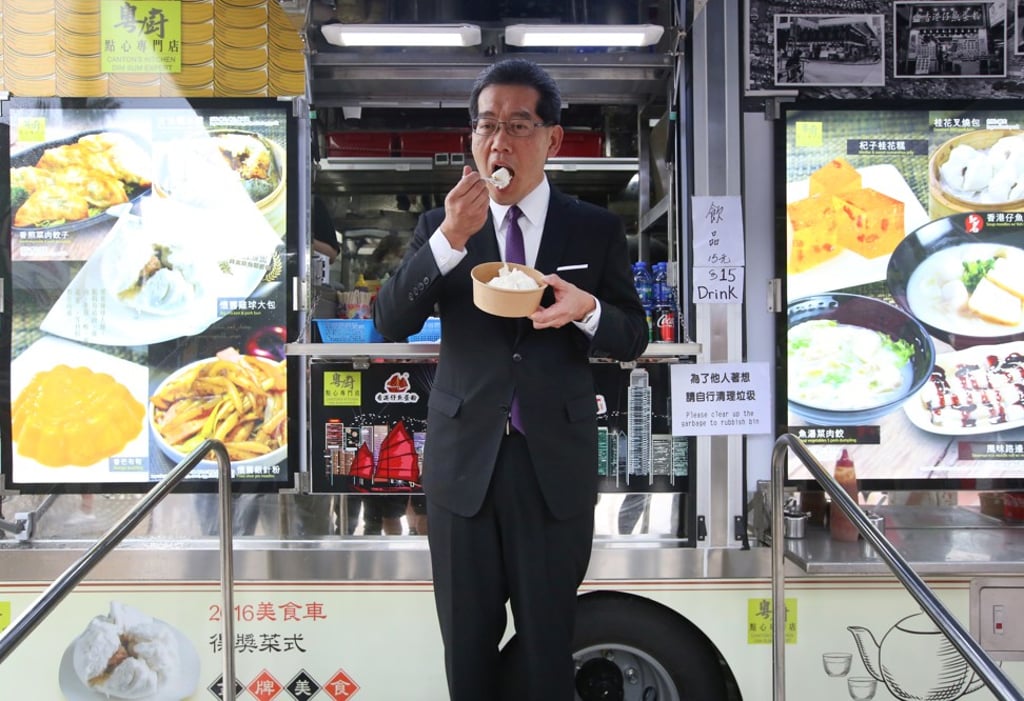
Gregory So visits a food truck at Hong Kong Disneyland, the only location where operators are turning a profit, on April 20. Photo: Sam Tsang
The scheme was pretty cack-handed from the outset. Where Bangkok and other Asian cities are famous for their street food scene, as Hong Kong used to be, the government here did its best to drive hawkers out of business on health and hygiene grounds. If they wished to survive they had to move into proper cooked food centres. This was based on the premise that health concerns should trump “atmosphere” in a crowded city like ours, which is a legitimate point.
Overall the [food truck] scheme comes across more as a bureaucratic exercise rather than an attempt to create a new culinary experience
In deciding to revive the concept, albeit in a limited way, the government made some rather fundamental decisions. First, it resolved that though the food is being sold from trucks with wheels, the vehicles are not free to move around. In other words, customers must come to where the food is. In which case one may well ask what is the difference between a food truck a la Hong Kong and a fixed restaurant or kiosk.
Advertisement
Secondly, the government chose the locations and allocated spaces. It selected eight spots adjacent to tourist hotspots and two spaces at each, for a total of 16 trucks. Next came the selection process. Applications were assessed according to food concept, menu, business and financial proposals, design of the vehicle, and so on. One has to ask what expertise civil servants have in some of these areas and how it compares to the experience of actual operators. Overall, the scheme comes across more as a bureaucratic exercise rather than an attempt to create a new culinary experience.
Inevitably, the pilot scheme has run into headwinds. Only one of the eight locations is apparently profitable – the one next to Disneyland, where of course it is cannibalising the profits of the theme park operator from his own catering outlets.
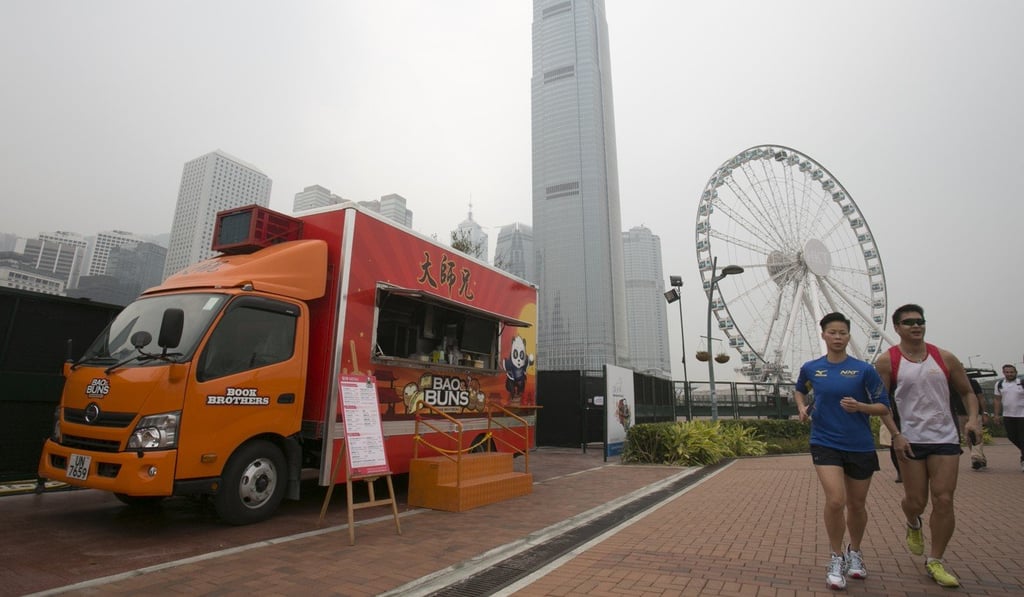
A food truck is parked at Central Harbourfront in Central. Why can’t the trucks move to where the demand for their products is, which may be different at different times of day? Photo: May Tse