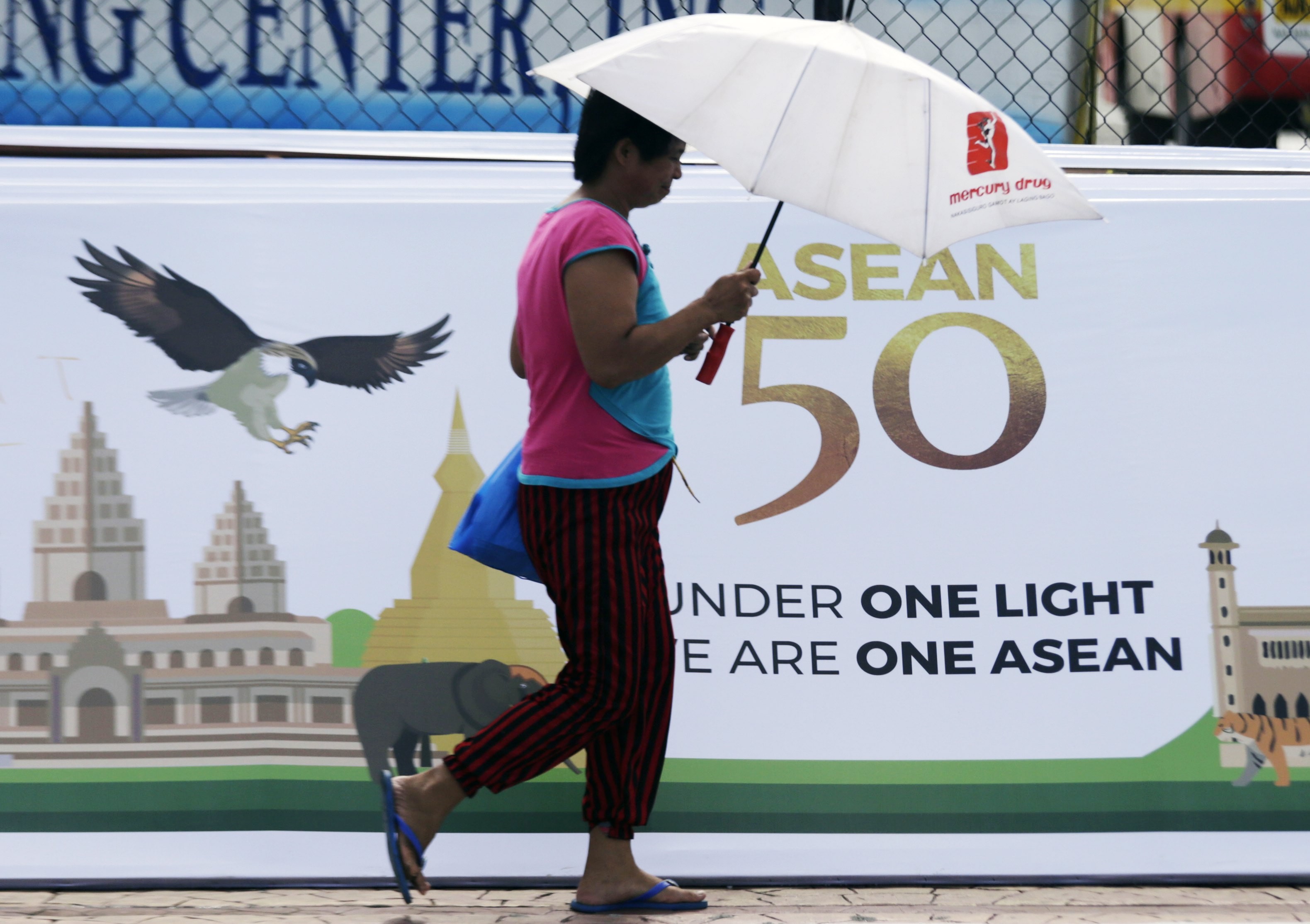
50 years on, the South China Sea stands between Asean and ‘one community’
Cary Huang says many Asean members are caught between ‘China opportunities’ and the ‘China threat’, as they walk a tightrope between security ally US and an assertive Beijing, with disputes in the South China Sea threatening regional stability
Cary Huang is a veteran China affairs columnist, having written on this topic since the early 1990s.
China and Asean have set a good example on regional economic integration to bring about mutual benefit.
But the deeper economic engagement between China and its smaller neighbours does not automatically translate into trust and friendship. Instead, mutual suspicion is on the rise, due to conflicting geopolitical interests amid rising US-China rivalry over domination of regional affairs.
The China-Asean Free Trade Area took effect in 2010. As of 2016, China had been Asean’s biggest trading partner for eight consecutive years, while the bloc ranked as China’s third-largest trading partner for six years in a row. Two-way trade totalled US$452.2 billion last year, with combined two-way investment crossing US$183 billion this May.
Advertisement
The Association of Southeast Asian Nations was founded on August 8, 1967 by Indonesia, Malaysia, the Philippines, Singapore and Thailand, and later expanded to include Brunei, Cambodia, Laos, Myanmar, and Vietnam. It was hoped that grouping 10 nations, with a total area of 4.46 million sq km and a population of nearly 600 million, would help them stand up to the major world powers.
However, the bloc has a long way to go in its efforts to play a crucial role in the maintenance of regional stability and security, amid escalating territorial disputes in the South China Sea between China and Asean members Malaysia, the Philippines, Vietnam and Brunei, as well as Taiwan.
Many Southeast Asian nations are deeply influenced by the history, traditional culture and values of China, as they were once Chinese “protectorates” or “tributary states”. Now they are still caught between “China opportunities” and the “China threat” as Beijing leverages its rising economic clout, military power and traditional diplomacy to reassert its historical domination in the region. Beijing has pushed its territorial claims across the South and East China seas, while trying to preserve stability and diplomatic goodwill to preserve regional trade and investment networks.
Advertisement
The bigger challenge for the group is the rising friction between China and the US, as Washington shifts its strategic focus to the region in an effort to contain China’s rise and assertiveness.