-
Advertisement
Hong Kong housing
Opinion

Hong Kong housing policy should focus on those living in the poorest conditions

Regina Ip says given our sky-high property prices and the critical lack of land supply, the government is in no position to try to build a housing ladder. Instead, it must focus on helping those with the greatest need

Reading Time:4 minutes
Why you can trust SCMP
A rooftop shack in Cheung Sha Wan. The government’s priority should lie in improving the lot of those who live in abject conditions, such as those in subdivided cubicles or rooftop squatters. Photo: K. Y. Cheng
Regina Ip

Last year, many in Hong Kong had good reason to pop the champagne corks. The Hang Seng Index outperformed all Asian markets and rose 35 per cent. The housing market registered similar robust growth, with home prices up 20 per cent year on year, according to the Centa-City Index. Housing units across all segments, from luxury homes to “nano” flats, were sold at record, jaw-dropping prices. Sales of private housing units reached a record HK$280 billion, according to Centaline.

At such stratospheric levels, even some developers joined exasperated prospective homebuyers in expressing concerns about the sustainability of such prices, and the financial risks borne by developers who provided additional mortgage to buyers. With a continuing shortage of land and public housing units, the government seems helpless in tackling the twin problems of housing shortages and the concomitant bubble.

To formulate truly effective policy responses to address the impasse, the government, and the public, must get to the root of the problem.

Hong Kong’s home prices are the world’s highest. Can the city fix it?

Skyrocketing property prices in Hong Kong are a direct consequence of the excess liquidity produced by central banks to save the global economy after the subprime-induced financial tsunami a decade ago. There has been a massive inflow of capital since the fourth quarter of 2007. Since then, it is estimated that Hong Kong has received a net inflow of more than HK$1 trillion, fuelling the ballooning of domestic asset prices across different classes, from residential homes, shops, office and industrial units, and car park spaces, to taxi licences and cryptocurrencies. With too much money chasing too little supply of residential units, the continuous surge of home prices seems inevitable.

Watch: Explaining Hong Kong’s housing crisis
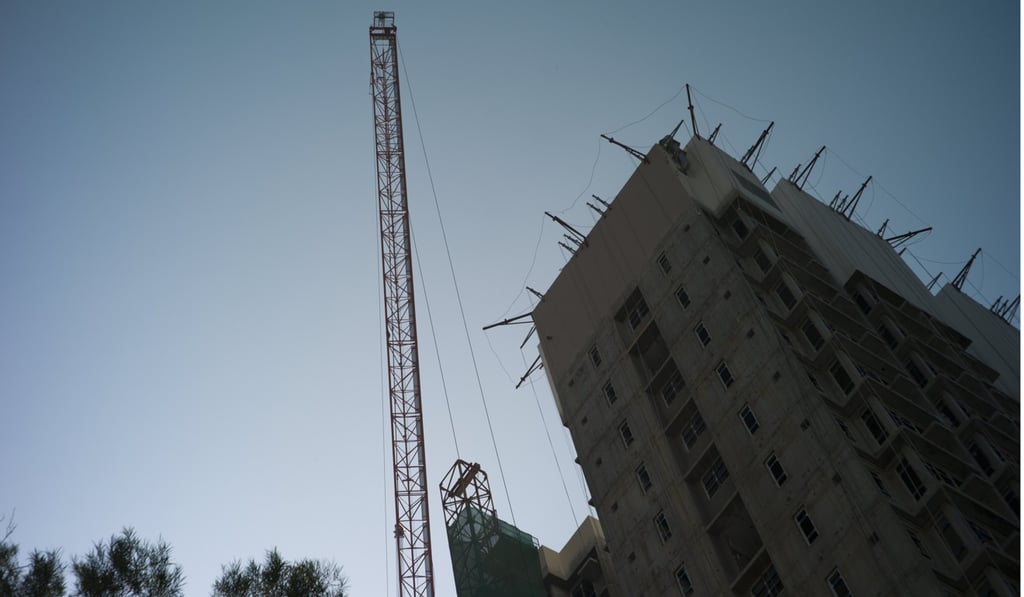
On the supply side, the government’s hands are tied by the fact that, in contrast to private developers, it has no land bank. In the present-day political climate, it takes much longer than in the “good old days” of high-speed, unchecked growth to produce land or to build new development areas. Government officials have conceded that they may fall short in meeting the 10-year target of producing 280,000 public and subsidised housing units by 2027-28. The average waiting time for public housing applicants has lengthened to 4.6 years, and the soonest a substantial quantity of public housing units – 200,000 – can reach the market, in stages, will be 2023.
Advertisement
Construction continues in the So Uk public housing estate in Cheung Sha Wan. The estate is being redeveloped. Once completed, it will comprise 14 blocks, with nearly 7,000 flats. The government is aiming to produce 280,000 public rental and subsidised sales flats in the next 10 years, a target it will not meet if it does not find enough land for development. Photo: EPA-EFE

Housing plan for part of Hong Kong Golf Club would showcase Carrie Lam’s commitment to the people

In view of the difficulty it has encountered in speeding up its public rental housing programme, the government has resorted to encouraging the release of public rental housing units by stepping up enforcement of the “well-off tenants policies”, implementation of the “green form scheme” (a scheme for selling public housing to sitting tenants and those eligible for public rental housing); and expanding sales of subsidised units to low-income applicants by waiving the premium payment.

The government has a duty to ensure that each and every one of its citizenry live in decent conditions
Advertisement
Select Voice
Select Speed
1.00x