
Outside In | In a world awash with false ideas, ‘factful’ thinking can help us recognise the progress we have made
David Dodwell says the work of the late Hans Rosling shows why we have tended to overlook extraordinary human progress in recent decades, and how we can continue it if we maintain international cooperation

Let’s begin with a little test. Take a look at the 10 questions below. Answer A, B, or C to each.
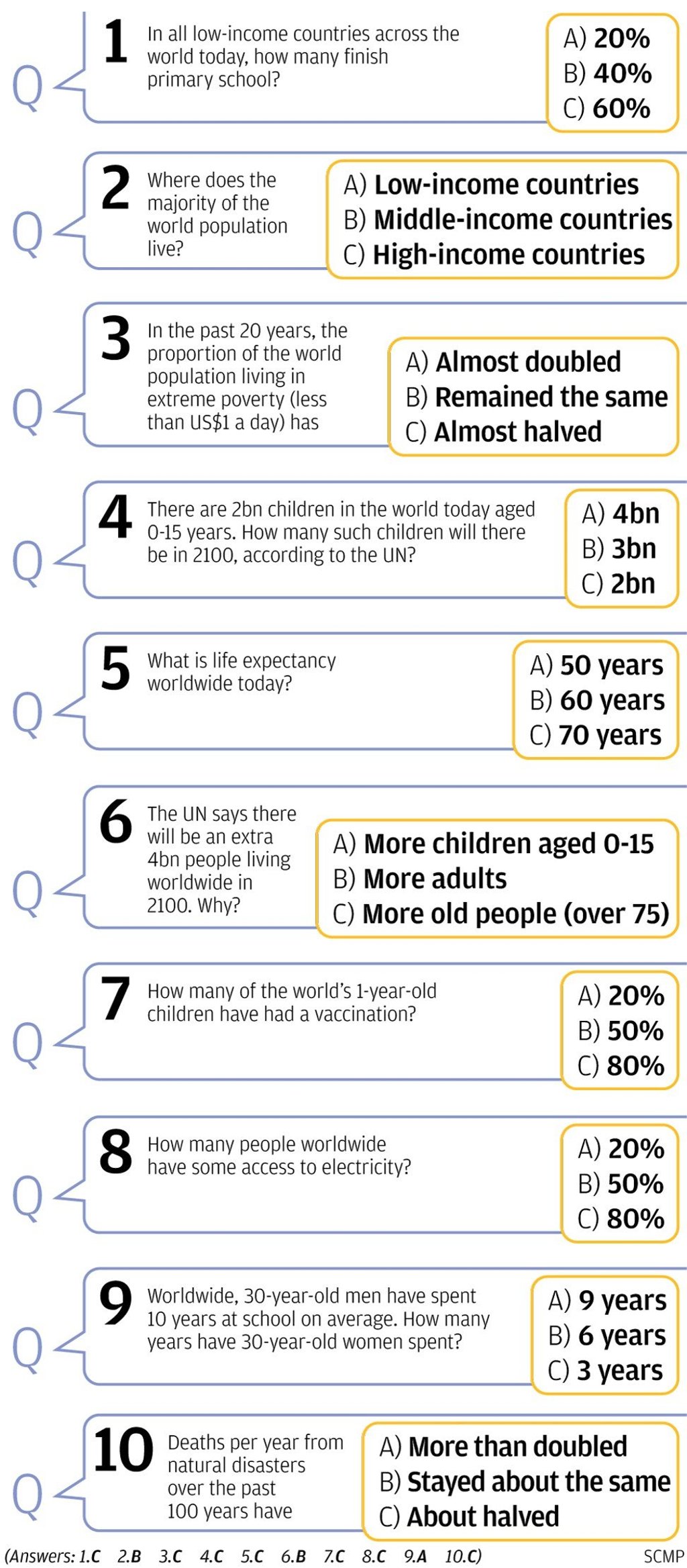
These questions were among those thrown at 12,000 people worldwide by Hans Rosling, possibly the world’s most famous statistical guru because of his mesmerising TED talks, which he illustrated with memorable bubble charts tracking the global trends that were the focus of his academic life.
Rosling’s book, Factfulness , co-authored with his son Ola and daughter Anna, has just been published, a little more than a year after he died of pancreatic cancer last February.
Though answers are available in frequently used public sources, and used commonly in discussions about global economic and social trends, not a single one of Rosling’s respondents got all the answers right. Fifteen per cent of respondents scored zero. The average score was two.
“This ignorance is not an accident,” Rosling concluded. “Only actively wrong knowledge can make us score so badly. Everyone seems to get the world devastatingly wrong. Not only devastatingly wrong, but systematically wrong.” He made it his life’s work, with his son and daughter, to attack the roots of this “factlessness”.