
Advertisement
Inside Out & Outside In
Opinion
David Dodwell

Outside In | Are Chinese students in the US a national security threat, or an economic benefit to both countries?

  • David Dodwell says the many Chinese students studying abroad were putting Apec’s ‘earn, learn, return’ model into practice – then US ideologues saw something more sinister at play

Reading Time:4 minutes
Why you can trust SCMP
A group of Chinese graduates throw their academic caps into the air after the 2016 commencement ceremony at Columbia University in New York. China’s Ministry of Education said that more than 600,000 Chinese studied abroad in the 2017-18 academic year. Photo: Xinhua

For more than eight patient years, Doris Ho, one of the Philippines’ most respected members of the Apec Business Advisory Council, worked tirelessly to eliminate barriers to the movement of working people around our Apec region.

Her legacy was captured in the idea of “Earn, Learn, Return”. The idea was radical, and fundamentally at odds with existing Western ideas about international labour mobility. It was radical because it had absolutely nothing to do with the politically toxic problems in many countries linked with migration.

Existing labour mobility policies were built around the idea of a government recognising that it had labour or skills shortages that could not be met from within its own economy. In response, “points” systems were created that offered people with the right skills the chance to immigrate, become full citizens and settle permanently.
Advertisement
But locals have often risen up in opposition, making the “immigration” issue the toxic one it is today, not just across Europe or Donald Trump’s United States, but in Canada, Australia and other rich economies around the world.
Ho’s “Earn, Learn, Return” started from a wholly different premise. Countries (like her native Philippines) were maybe poor and, for a wide range of reasons, unable to offer value-adding or well-paid jobs, but they had lots of willing hands with skills that could be valuable in richer and more successful economies.
Advertisement
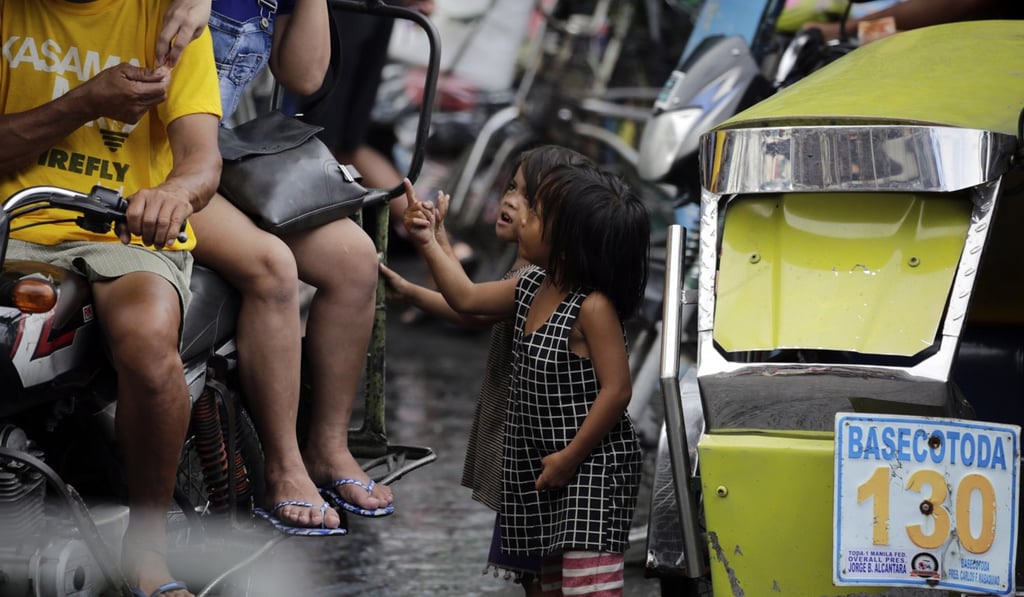
Filipino children beg for money on a street in Manila on December 5, 2018. According to a new study by the Philippine Institute for Development Studies, inflation and natural disasters threaten to sink more Filipino households into poverty if the government fails to implement needed interventions. Photo: EPA-EFE
Advertisement
Select Voice
Choose your listening speed
Get through articles 2x faster
1.25x
250 WPM
Slow
Average
Fast
1.25x