
Advertisement
Macroscope
Opinion
Patrik Schowitz

Macroscope | Contagion fear: emerging markets’ currency crises spook investors far and wide. How will Asia fare?

Patrik Schowitz says that as bad as the news has been for emerging markets, particularly Turkey, Argentina and South Africa, there’s little risk of a total meltdown among Asia’s emerging economies, where fundamentals look sound

Reading Time:3 minutes
Why you can trust SCMP
People look at a currency exchange board in Buenos Aires' financial district in Argentina on August 31. Difficulties for emerging markets have been exacerbated by Argentina, where the currency is plunging and the threat of another recession looms, despite a US$50 billion support package from the International Monetary Fund. Photo: Reuters
Geopolitical risk in financial markets can, at times, feel menacing and imminent. At other times, the source of geopolitical risk can seem far away, and yet there is a clear impact at home. 
Recent developments in emerging markets are a case in point. The weakness in emerging market assets this year was originally largely driven by geopolitical worries around the protracted trade tensions between the US and China, at a time when the Chinese economy is going through a phase of restructuring and slower growth. Admittedly, other risks such as messy US politics and Brexit have also played their part.
In recent days, however, market moves have taken on another dimension, as more emerging market currencies have come under pressure, largely as a result of the currency crises in Turkey, Argentina and South Africa. While these may seem far away and should, in principle, have limited real economic spillover in Asia, they do affect markets across the world by spooking investor sentiment in what is often called “contagion”.
Advertisement

In assessing the impact of geopolitical risks on portfolios, we can turn to some time-tested lessons from history. First, uncertainty can be more damaging than the event itself; second, it is often in the currency or government debt markets – sometimes both – where geopolitical risks play out most strongly; and finally, equity markets can at times prove surprisingly resilient to political turbulence.

But there are differences between emerging and developed markets. While it is tempting to assume that a geopolitical issue will send investors running from all a country’s asset markets, this is mainly the case in emerging markets, where currency and asset markets tend to be positively correlated (moving in the same direction). In developed markets, however, currency and equity markets are normally negatively correlated, exerting a stabilising influence on asset prices during times of worry.
Advertisement
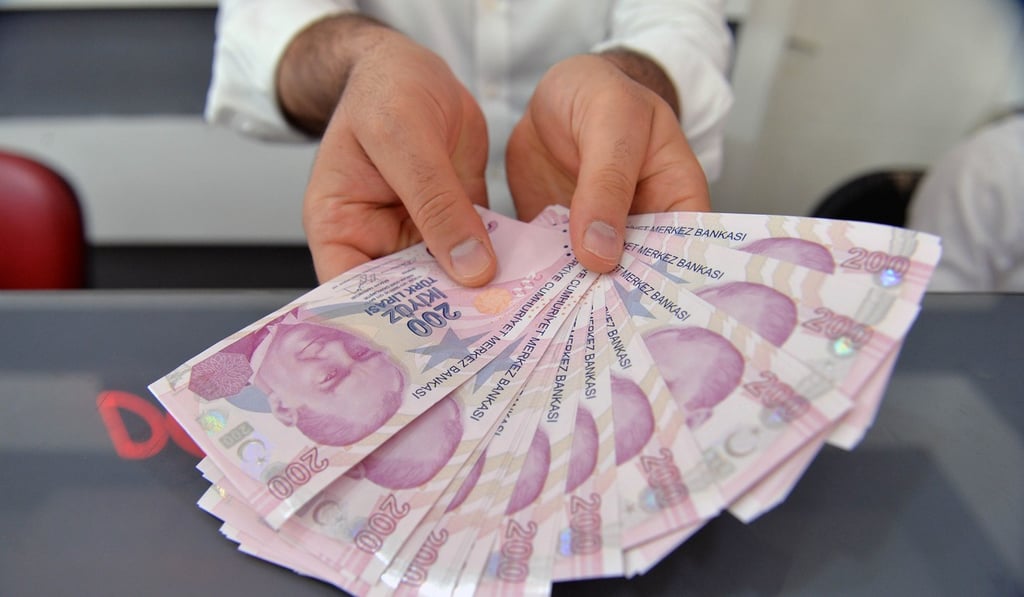
A money changer counts Turkish lira banknotes at a currency exchange office in Ankara on August 10. Not only has Turkey’s currency plunged 20 per cent in recent weeks, inflation is at a 15-year high. Photo: Xinhua
Advertisement
Select Voice
Choose your listening speed
Get through articles 2x faster
1.25x
250 WPM
Slow
Average
Fast
1.25x