Advertisement
Three reasons not to blame Trump when the global ‘free’ trade order collapses
Andy Xie says holding the erratic US president responsible for the unravelling of so-called free trade obscures the fact that other economies – including the EU’s – are more mercantilist, the current system is unsustainable and poorer workers have not benefited from it
4-MIN READ4-MIN
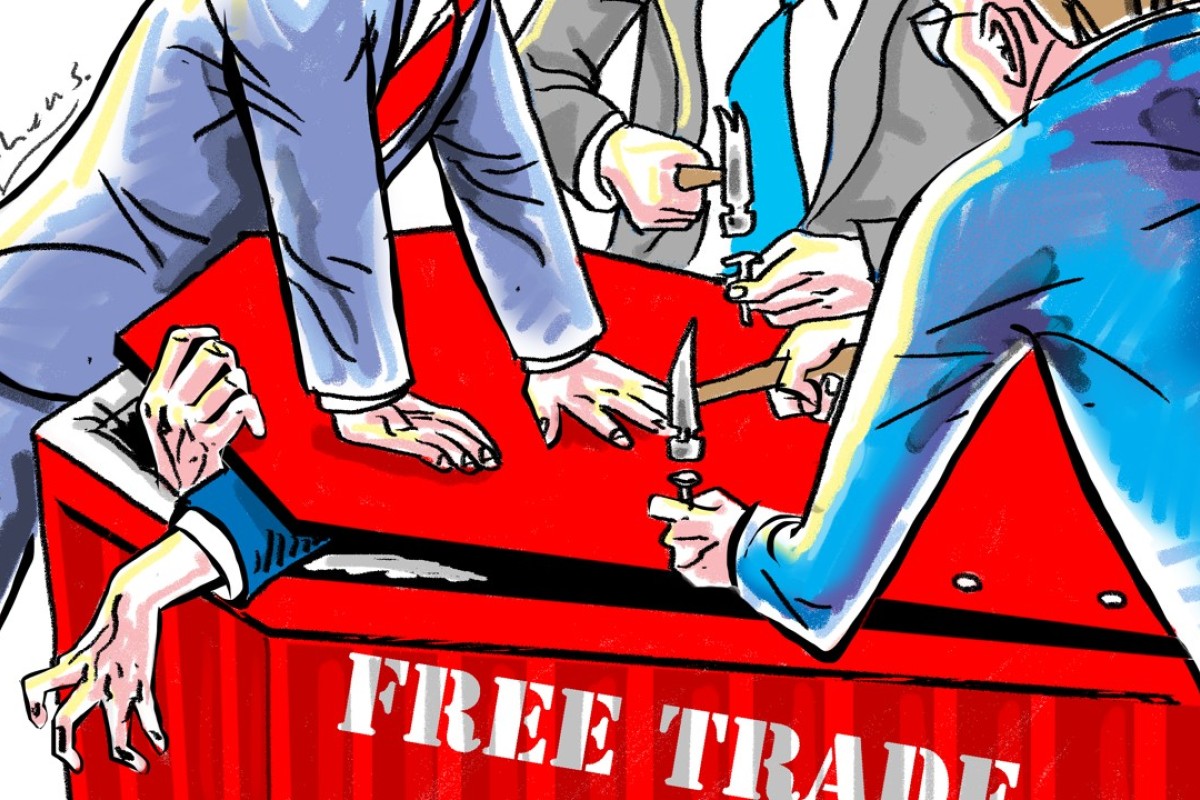
The United States’ tit-for-tat tariff spat over steel and aluminium with its Nafta partners and the European Union is another nail in the coffin for free trade. While President Donald Trump’s approach to trade is erratic, the other major trading nations are only focused on tactics to contain Trump, and are not responding to the underlying causes of the tension.
While a major trade war is unlikely for now, because all parties are scared of the short-term consequences, the frequent skirmishes will deter multinational companies from making cross-border investments, especially in emerging economies. Free trade will die a slow death.
The receding tide of globalisation has far-reaching consequences for the global economy and financial markets. Low inflation, high economic growth and a rising share of profit in the global economy have powered financial markets over the past three decades, producing long-term bull markets for bonds and stocks. All three trends could be reversed in the coming decades; both bonds and stocks could be heading for protracted bear markets.
Advertisement
The current crisis stems from global leaders who have ignored globalisation’s impact on labour and kept faith in the rising tide to solve all problems. But the negative impact on workers in the most open economies like the US and UK has become worse and worse.
Real wages in the US have stagnated for four decades, while college tuition and health care costs have tripled in real value. The trend is incredibly unfair for most people. Education and health care costs are no big deal for rich people but take up huge chunks of income for most.
Advertisement
To add insult to injury, the squeeze between stagnant wages and rising living costs is a result of the same force. Globalisation has kept inflation low, which has allowed central banks to keep interest rates low, which inflated financial assets and benefited the rich. But, predictably, it inflated non-tradeable sectors like education and health care. If the trend is not addressed, it’s just a matter of time before a revolution happens. If you think Trump is bad news, what comes next could be a lot worse.
Advertisement
Select Voice
Select Speed
1.00x