
Advertisement
The View
Opinion
Stephen Roach

The View | The Federal Reserve’s quantitative easing report card is mixed – except for the rich

Stephen Roach says as the 10th anniversary of the Federal Reserve’s quantitative easing programme approaches, five lessons can be learned from its successes and shortcomings

Reading Time:4 minutes
Why you can trust SCMP
Members of the Occupy Wall Street movement stage a protest march near Wall Street in New York on October 12, 2011. The Federal Reserve’s quantitative easing programme, instituted after the 2008 financial crisis, increased income inequality. Photo: AFP
November 2018 will mark the 10th anniversary of quantitative easing (QE) – the boldest policy experiment in the modern history of central banking. The only thing comparable to QE was the US Federal Reserve’s anti-inflation campaign of 1979-1980. But that earlier effort entailed a major adjustment in interest rates via conventional monetary policy. By contrast, the Fed’s QE balance-sheet adjustments were unconventional and, therefore, untested from the start.
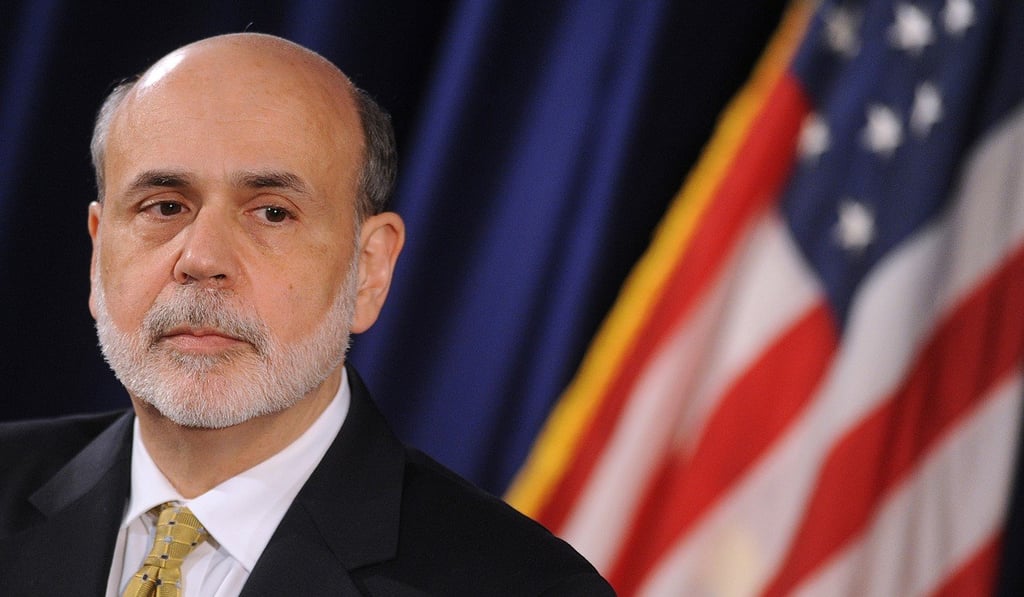
The American Enterprise Institute recently held a symposium to mark this important milestone, featuring QE’s architect, Ben Bernanke. What follows are some comments I offered in an accompanying panel session.

The most important lesson pertains to traction – the link between Fed policy and its congressionally mandated objectives of maximum employment and price stability. On this count, the verdict on QE is mixed: the first tranche (QE1) was very successful in arresting a wrenching financial crisis in 2009, but the subsequent rounds (QE2 and QE3) were far less effective. The Fed mistakenly believed that what worked during the crisis would work equally well afterwards.

Advertisement

An unprecedentedly weak economic recovery says otherwise; the QE payback was disappointing. From September 2008 to November 2014, successive QE programmes added US$3.6 trillion to the Fed’s balance sheet, nearly 25 per cent more than the US$2.9 trillion expansion of nominal GDP over the same period.
Advertisement
Ben Bernanke, chairman of the Federal Reserve, speaks during a news conference following the Fed’s monetary policy decision in Washington on June 20, 2012. Bernanke was the architect of the Fed’s quantitative easing programme. Photo: Abaca Press / MCT
Advertisement
Select Voice
Choose your listening speed
Get through articles 2x faster
1.25x
250 WPM
Slow
Average
Fast
1.25x