Europe’s slowdown leaves China’s exporters with another big gap to fill amid trade war with US
David Brown says as the German economic spring appears to be winding down, and with Europe expected to have a hard landing, China should be looking less to exports

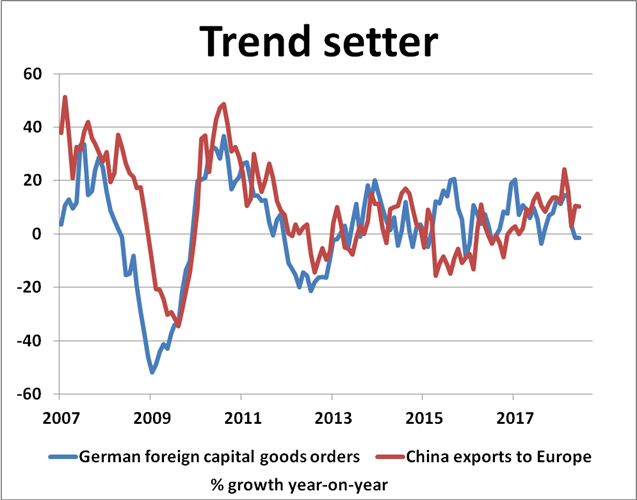
There used to be a time when Germany’s Bundesbank ruled the monetary policy roost in Europe, poring over manufacturing orders data for vital interest rate clues. Beijing’s planners should be doing the same thing, as German orders foreshadow a worrying slowdown in global business activity.
It is not just Germany’s economy showing signs of fatigue, as Europe’s recovery is also looking more frayed around the edges these days. The European Central Bank’s super-stimulus programme will soon end and add to the gloom. Beijing should take note as it is another canary down the coal mine signalling tougher times ahead.
With a market of 740 million consumers, Europe is an important destination for Chinese exports. A downturn in European demand for China’s goods could be bad timing for Beijing in the midst of its deepening trade war with America. The prospect of slower world trade, weaker global economic activity and the shadow descending over international equity markets compound the problem. Beijing needs a bold reflation plan to help soften the external blow while boosting the domestic economy. No time like the present to get those policy changes into gear.
On the surface, Germany looks surprisingly sprightly with recent gross domestic product figures showing its economy picked up more speed in the second quarter, expanding at an annual rate of 2 per cent, compared to 1.5 per cent in the first three months of the year. It is a boost for government hopes of hitting its 2.3 per cent GDP target this year, well above the economy’s sluggish 1.3 per cent average growth rate for the past 10 years.
Some say it could be the renaissance of a German economic spring, while others put it down to a temporary blip thanks to the ECB’s super-stimulus programme, which is soon to be withdrawn. German consumers and businesses certainly enjoyed a mighty boost from easy rates, fast money and a cheap euro exchange rate but it was never meant to last forever. The reality is that Germany and Europe’s economy should come back down to Earth with a bump.