Advertisement
Macroscope
Opinion

China is seeking a stable solution to its economic slowdown, not the quick fix of a stimulus package

Aidan Yao says Beijing won’t revisit its past policy of pumping money into the economy at the expense of long-term sustainability. This time, it is using monetary tools more carefully and also restructuring the income tax system

Reading Time:3 minutes
Why you can trust SCMP
A pedestrian walks past a luxury store in Shanghai. China’s economy is slowing, and risks from the trade war with the US are not helping. Photo: Bloomberg
Aidan Yao
Chinese authorities are easing their macroeconomic policies amid concerns over internal growth and external risks from the trade war with the United States. The latest cut in the reserve requirement ratio – the level of cash lenders must hold as reserves – is a sure sign that Beijing is beefing up its monetary policy.

However, recent data, such as the manufacturing Purchasing Managers’ Index, has been unimpressive, suggesting more policy support is needed to relieve the pressure on growth.

More economic stimulus measures can be expected, but Beijing is not about to revisit its policy of pumping money into the economy at the expense of long-term sustainability. This round of policy easing is likely be more cautiously managed and executed to minimise the side effects associated with a previous stimulus package. Already, there is some evidence of this.

Watch: Jack Ma urges business leaders to help stop US-China trade war

Advertisement
First, instead of just pouring liquidity into the economy, Beijing is relying more on fiscal policy to boost growth. The reduction in income tax, the lowering of business fees and costs, and expediting budget disbursement to ramp up infrastructure spending are just some examples of the fiscal authorities’ heavy lifting.

Second, the People’s Bank of China is using monetary tools more judiciously. Compared to 2008-9 and 2015-6, when the central bank slashed the reserve ratio by 600 basis points (200 basis points for big banks and 400 for small banks) and 300 basis points for all banks respectively, it has announced three targeted reductions since April. And the banks must use a large amount of the freed-up liquidity to repay loans obtained from the central bank’s medium-term lending facility, among others.
Advertisement
In addition, the PBOC has kept benchmark interest rates stable so far, in contrast to the previous series of cuts. Furthermore, the supply of non-bank credit has been restricted by tightened controls on shadow banking. This clearly reflects Beijing’s intention to preserve the progress of the past two years towards deleveraging.
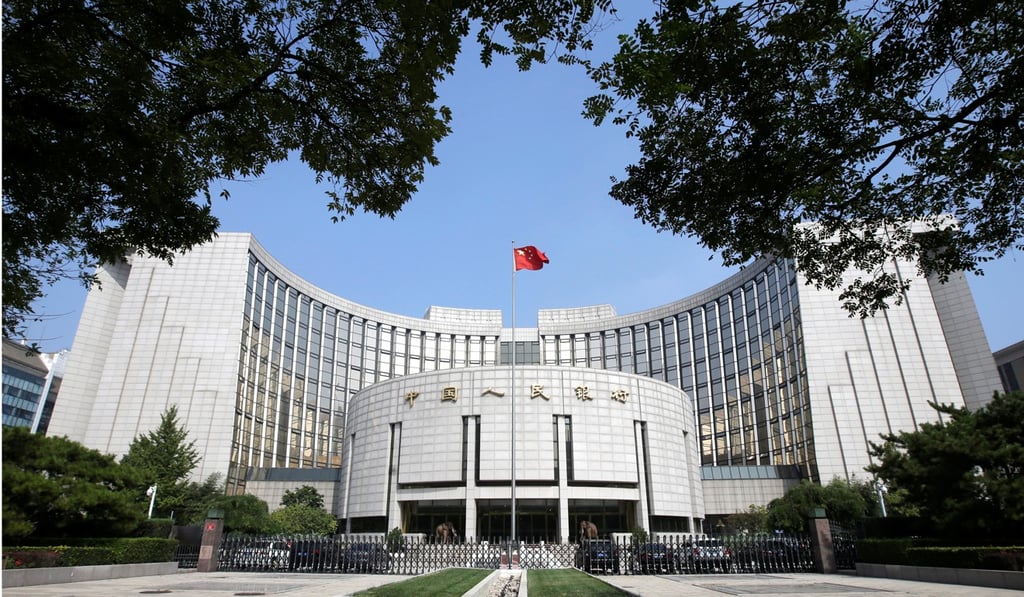
The People’s Bank of China has announced three reductions in the reserve ratio to free up liquidity this year. Photo: Reuters
Advertisement
Select Voice
Choose your listening speed
Get through articles 2x faster
1.25x
250 WPM
Slow
Average
Fast
1.25x