Medical discoveries can wait. First, improve Hong Kong’s access to clinics and primary care
David Dodwell says medical innovations involving AI and gene-profiling don’t count for much when needs like community-based primary care and elderly care are neglected. And these are areas in which Hong Kong must do better
David Dodwell is CEO of the trade policy and international relations consultancy Strategic Access.
Open the New Year edition of National Geographic, and you find the entire 144-page volume offering a fascinating glimpse into the radically exciting future of medicine. Combine the unpeeling of the genome with artificial intelligence, the computing power to manage big data, and nanotechnology, and the potential is emerging both to address serious sickness and manage wellness on a previously unimaginable scale. It must be an awesome time to be a young doctor or medical researcher.
But as one reads enthralled article upon article on developments in “precision medicine”, gene-profiling, chrono-nutrition, immune system stimulus, and nanopatches to monitor health, and deliver medical devices in capsules inside the body, one feels a gnawing discomfort: a sense that beneath the dizzying potential to tackle medical challenges that have sat unresolved for the past century, there lie fundamental difficulties and medical systems that are in crisis rather than on the threshold of a new tech-driven era.
One unexpected area explored alongside genomic medicine in the issue (and of particular interest to us in Hong Kong) is recent research into the potential of traditional Chinese medicine, as Western-trained doctors attempt to discover the active ingredients in ancient treatments.
Advertisement
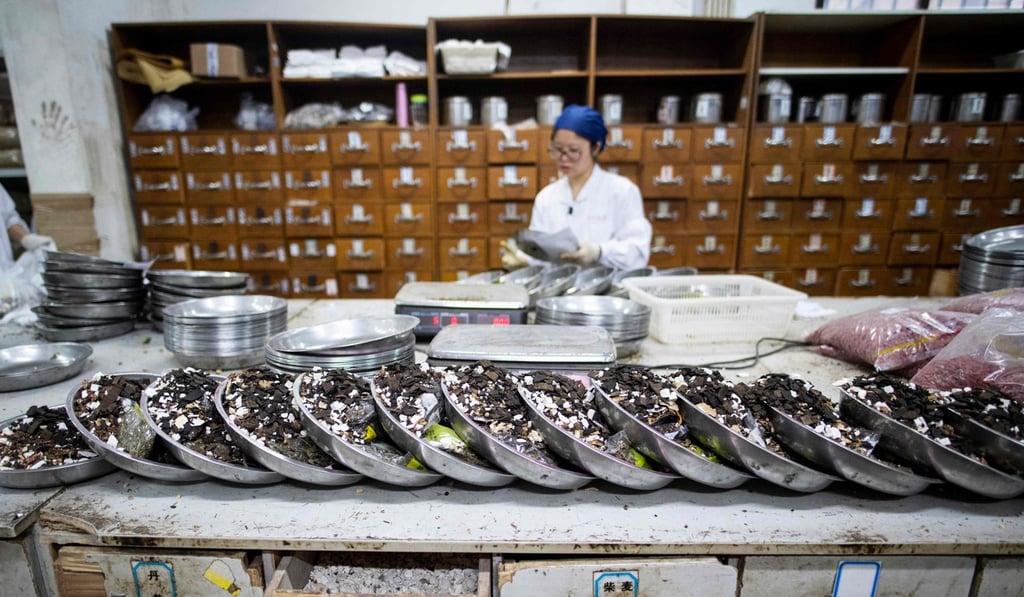
While National Geographic had more interest in goji berries,bear bile and qi, I have a direct interest here. Several years ago, I began brewing a concoction of traditional Chinese herbs that the Chinese Academy of Medical Sciences believed could stave off dementia (the Post had a long report on this “smart soup” almost exactly four years ago). I still take this brew today, and I suppose only time will tell whether it works.
A woman mixes Chinese herbs in the pharmacy at Yueyang Hospital in Shanghai. Photo: AFP
Advertisement
Almost more interesting than the medicine itself is the fact that the active ingredients – black cardamom, poria mushroom, Chinese senega root, sweet flag rhizome – are dirt cheap and available at almost any Chinese pharmacy (I even found them in a little pharmacy on the high street in my parents’ hometown in Lincolnshire). I am sure that if the active ingredients in the Chinese herbs were being distilled and dispensed by a Western pharmaceutical company, they would be costing me a king’s ransom.