
Advertisement
Macroscope
Opinion
Nicholas Spiro

Macroscope | When the Fed is worried about China, it’s no time to get carried away by Sino-US trade talks

  • Nicholas Spiro says the bond market, where the smart money is, thinks the newly dovish Fed is too optimistic about US growth. Meanwhile, 2019 is starting to look like 2016, when China’s softening economy caused concern among US policymakers

Reading Time:3 minutes
Why you can trust SCMP
A woman walks through Shanghai’s Lujiazui financial district. As China’s economic growth slows, the Federal Reserve has put its interest-rate-hiking campaign on hold. Photo: AFP
It appears the “Fed put” – the idea that central banks will prop up asset prices amid financial turmoil – never went away after all. Despite fears that Jerome Powell, chair of the US Federal Reserve, would stay hawkish in the face of a sharp sell-off in financial markets, investors were given the strongest indication last week that this is not the case. The Fed decided to put its interest-rate-hiking campaign on hold, mainly to assess the impact of the global economic slowdown.

As recently as late December, Powell was flagging not only two further rate hikes this year but also a gradual reduction in the size of the central bank’s balance sheet. But policymakers started sounding more dovish after Christmas, and stocks jumped in a rally that has been further fuelled by the Fed’s policy reversal last week.

The benchmark S&P 500 stock index declined more than 9 per cent in December, but has since almost erased that loss. Emerging market assets have performed even better. Buoyed by the recent Fed-induced weakness of the US dollar, the leading MSCI index of emerging market shares has risen 10.5 per cent since January 3. In a note published last Wednesday, JPMorgan said: “A decisively dovish Fed has provided a fresh source of impetus for a bounce in [emerging markets].”

Advertisement

On closer inspection, however, the Fed’s U-turn is cause for concern.
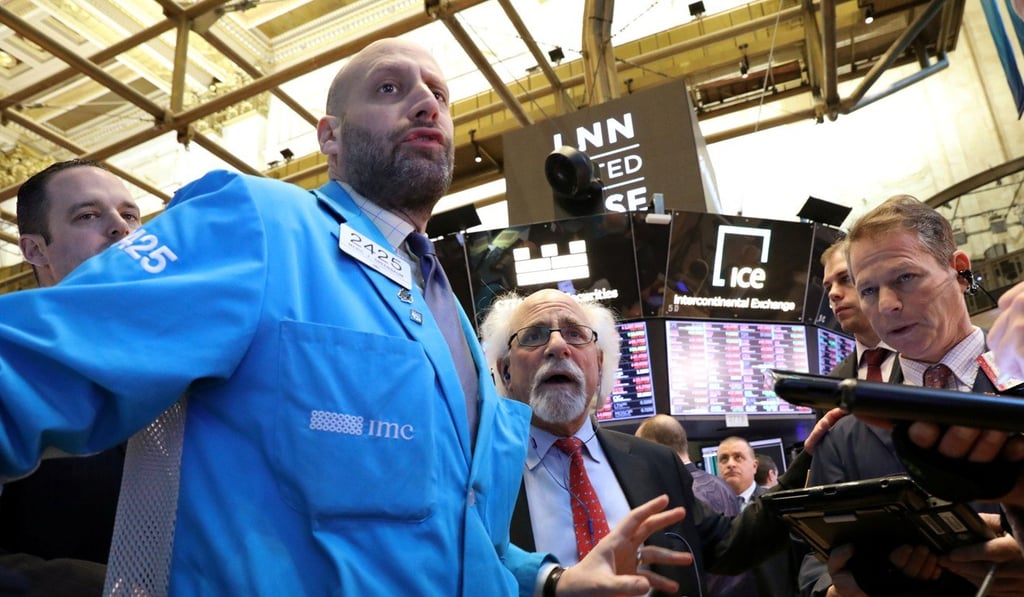
Traders work on the floor of the New York Stock Exchange. In switching to a dovish stance, some claim the Fed has “capitulated” to markets. Photo: Reuters
Advertisement
While central banks, especially the most powerful ones, need to be able to change direction quickly if economic and financial conditions suddenly deteriorate, the fact that the Fed reversed course in the space of six weeks casts doubt on its credibility. Nearly all the risks and vulnerabilities Powell cited as reasons for the Fed’s new wait-and-see approach were perfectly apparent in December, when the Fed raised rates for the fourth time in 2018.
Advertisement
Select Voice
Choose your listening speed
Get through articles 2x faster
1.25x
250 WPM
Slow
Average
Fast
1.25x