Advertisement

Macroscope
China should be free to let its currency function as a safety valve, regardless of what US trade negotiators want
- Major economies around the world, from Canada and Japan to the euro zone and Australia, reserve the right to let their currencies depreciate if conditions weaken. Beijing should not give up its right to do the same as part of any trade war settlement
3-MIN READ3-MIN

UK-based Neal Kimberley has been active in the financial markets since 1985.
As China and the United States continue to work towards a trade war settlement, the issue of the yuan looms large. Meanwhile, uncertainty about the conflict is contributing to signs of wider weakness in global economic activity. Some jurisdictions are reacting. Their currencies are likely to weaken as a consequence, acting as an economic safety valve.
The fact currencies can act as safety valves is something China’s negotiators should bear in mind. Beijing must not sign away its own options in this regard.
It’s also worth considering the idea that any eventual China-US trade settlement will itself have wider implications for the currency markets. Unless China’s appetite for imports is suddenly going to increase materially, any agreement that enhances bilateral trade flows between China and the US will only mean China buys fewer goods from elsewhere.
Advertisement
Potential losers in this scenario would have a vested interest in making their currencies as competitive as possible in the hope of retaining as much of their current export market share as possible.
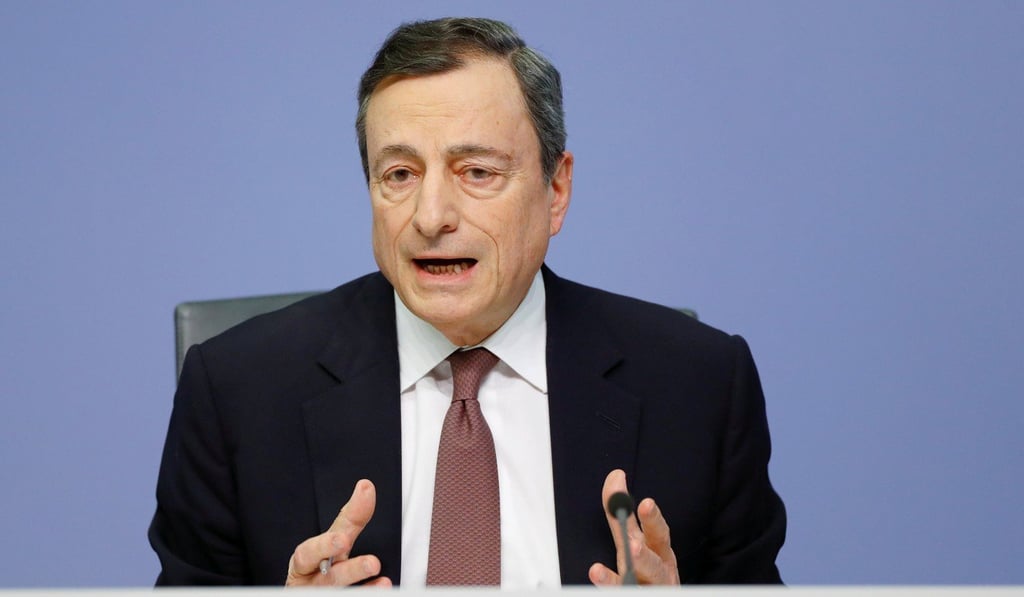
Such a consideration would not have framed last week’s European Central Bank (ECB) deliberations, but the monetary policy tweaks that the ECB did unveil – in renewed efforts to address economic weakness in the euro area and to pursue an inflation goal of close to but below 2 per cent – prompted the currency markets to mark the euro weaker.
Advertisement
Advertisement
Select Voice
Select Speed
1.00x