Advertisement
War and conflict
OpinionLetters

100 years since the first world war ended, can China lead world powers to break the cycle of vengeance?

2-MIN READ2-MIN
Torchlights are placed next to soldiers' tombs at the Douaumont ossuary and cemetery in eastern France, to commemorate the Battle of Verdun, one of the longest battles of the first world war. Photo: AFP
Letters

“I have not been killed yet, but it is a matter of time”, wrote a teenage British soldier to his mother during the first world war. The letter highlights how desperate and horrified soldiers felt in the trenches built to protect them from machine-gun fire and bombs, and is worth recalling – as this year marks the centenary of the end of the first great war. 

On the surface, the war was ignited by the assassination of Archduke Franz Ferdinand, the heir to the Austro-Hungarian throne, by Yugoslavian nationalist Gavrilo Princip in Sarajevo in June 1914, behind which were humiliations, hegemonies, influences and interests.
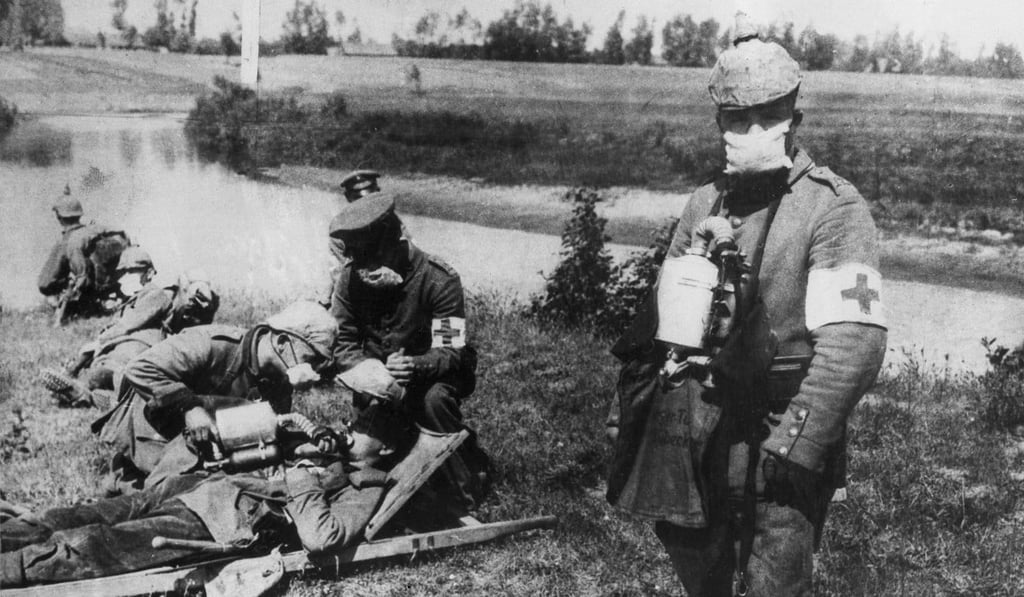
The great war ended with the defeat of the Central Powers led by Germany, leaving about 17 million soldiers and civilians dead and the collapse of the German, Romanov, Austro-Hungarian and Ottoman empires. On November 11, 1918, Germany, under adverse circumstances and public pressure at home, reluctantly signed an armistice with the Allies, symbolising the end of the war.
Advertisement
German Red Cross members try to revive those who succumbed to gas bombs during the first world war. Photo: AP

Coerced into paying excessive reparations and ceding territories to the Allies, Germany felt humiliated by the Treaty of Versailles signed in 1919. But France, which had been disgraced in the Franco-Prussian war in 1870, viewed the treaty as lenient. The shame the Germans felt ultimately led to the second world war. 

Advertisement
Vengeance and humiliation are apparently interrelated, as the retaliations between France and Germany in the two world wars show. Japan took vengeance on China in the Treaty of Shimonoseki after the first Sino-Japanese War and brutally persecuted the Chinese in the second world war as a result of being despised by China for centuries.
Advertisement
Select Voice
Select Speed
1.00x