Advertisement
China-Japan relations
OpinionLetters

Far from ‘despising’ Japan, China has always intended to ‘render good for evil’

Reading Time:1 minute
Why you can trust SCMP
Japanese monks pray at an altar ahead of a ceremony marking the 70th anniversary of the massacre of Chinese civilians by Japanese troops in Nanjing, at the memorial hall to the victims in this city in China’s eastern Jiangsu province, on December 13, 2007. Photo: AFP
Letters
I refer to Barnaby Ieong’s letter, in which he called on China to break the cycle of vengeance (“A century on from the end of the first world war, can China help break cycle of vengeance?”, May 13).

Mr Ieong claimed that “Japan took vengeance on China in the Treaty of Shimonoseki … and brutally persecuted the Chinese in the second world war as a result of being despised by China for centuries”.

I can find no historical evidence that China had despised Japan for centuries. The Chinese never invaded Japan, except under the Kublai Khan in 1274 and 1281, both failed campaigns. In the imperial past, especially in the Tang dynasty, Chinese monks travelled to Japan to spread Buddhism and many Japanese came to China to study. 

Advertisement

That was reversed in the 20th century when Japan modernised amid the Meiji Restoration and ranked as a world power after defeating the Russians. China was then willing to learn from Japan and many young Chinese went to study there. 
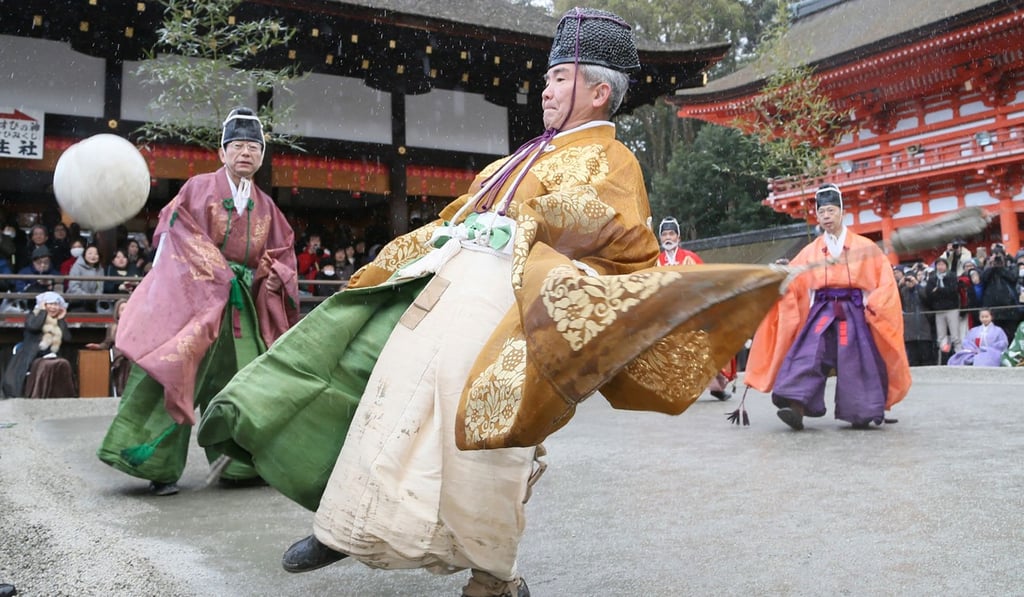
Players wearing ancient Japanese costumes kick a ball during the new year’s “Kemari” game, at the Shimogamo shrine in Kyoto on January 4. The eight-player game originally came from China almost 1,400 years ago. Photo: AFP
Players wearing ancient Japanese costumes kick a ball during the new year’s “Kemari” game, at the Shimogamo shrine in Kyoto on January 4. The eight-player game originally came from China almost 1,400 years ago. Photo: AFP 
Advertisement

Also, the Treaty of Shimonoseki was not Japan taking “vengeance on China”. It was the result of the imperialism of Japan, emboldened by successful Westernisation. Likewise, the second war world was caused by Japan’s ambition for land and resources, and for regional supremacy.

Advertisement
Select Voice
Choose your listening speed
Get through articles 2x faster
1.25x
250 WPM
Slow
Average
Fast
1.25x