Advertisement
Buddhism can’t be China’s soft power when its origins are Indian
Reading Time:1 minute
Why you can trust SCMP

With regard to the article on “dharma diplomacy” by Patrick Mendis (“China’s quest for soft power: where Confucius has failed, the Buddha may succeed”, June 1), the writer says that China should leverage its Buddhist heritage for a new soft power model.
Sorry Mr Mendis, while China has contributed a lot of things to the world of which it should be proud – Confucius, Taoism, paper, gunpowder and so on – Buddhism is not one of them. Even the word “dharma” is a Sanskrit term from India.
Siddhartha Gautama, who became known as the Buddha, was from India. His life and experiences, with all the pilgrimage sites that Buddhists aspire to visit – Sarnath, Kushinagar, Sravasti, Rajgir, and so on, are all located in India, including the most important one, Bodh Gaya, where he attained enlightenment. Though of course, his birthplace of Lumbini is located in neighbouring Nepal.
Advertisement
Buddhism was first spread to the countries to the west and east by India’s emperor Ashok in the second century BC. Later, Indian priests, kings, merchants and artisans travelled to Southeast Asia, impacting those countries with both Buddhism and Hinduism.
Advertisement
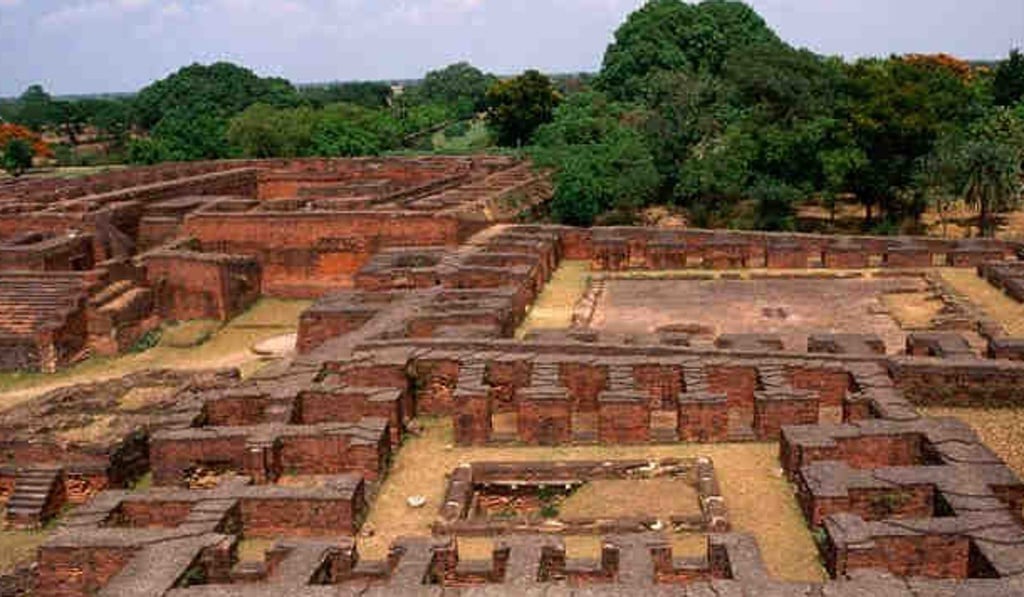
Chinese scholars had to visit the ancient Indian universities of Nalanda and Vikramshila, among others, to learn about Buddhism.
Advertisement
Select Voice
Choose your listening speed
Get through articles 2x faster
1.25x
250 WPM
Slow
Average
Fast
1.25x