When he was British prime minister, David Cameron toured Europe trying to get concessions from the European Union on benefits payments to EU nationals. He failed; the Members of Parliament couldn’t agree on Britain’s relationship with the EU; and so, in democratic fashion, they decided that the question should be put to the people of Britain in a referendum.
Parliament was in complete control of preparations, including the timing of the referendum and the design of the ballot paper – which bore the stark choice to either remain in the EU or leave the EU. There was no mention of negotiating deals of any sort and certainly no mention of further involvement of the House of Commons. An Act of Parliament was then passed to hold the referendum which was publicly declared “binding” by Cameron and senior ministers. During the campaign, it was made abundantly clear to the electorate that leaving the EU would prevent Britain from being part of the EU’s single market and exclude us from the Customs Union.
On June 23, 2016, the referendum was held and the highest number of voters ever took part to cast their votes. The vote resulted in a majority choice to leave the EU: a margin of 4 per cent. Up to this point, it was completely democratic.
Advertisement
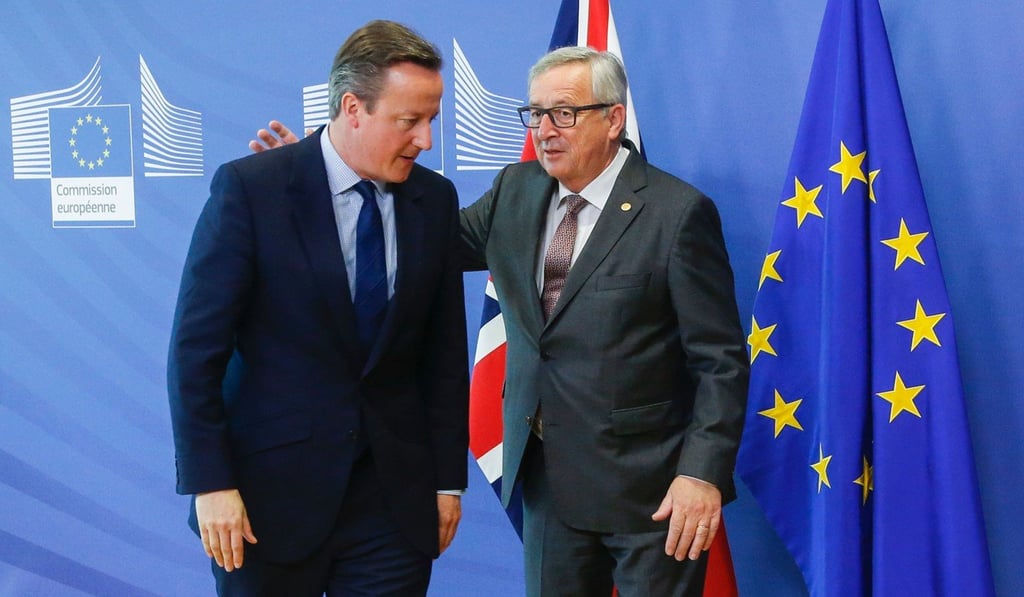
Then British prime minister David Cameron (left) and European Commission President Jean-Claude Juncker meet at the European Union headquarters in Brussels on June 28, 2016, five days after the Brexit referendum. Photo: AFP
Following the result, Cameron resigned and Theresa May was chosen by the Conservative Party to be the new prime minister. She followed Cameron’s advice and delayed invoking Article 50. Then one Gina Miller took the government to court in an attempt to have the referendum invalidated. After hearings in the High Court and subsequently in the Supreme Court, a judgment was delivered which totally ignored justice, logic and even common sense. The Prime Minister could negotiate a “deal” and Parliament would have the final say on the acceptability of any deal. This handed the final decision back to the very MPs whose indecision forced the referendum in the first place. This decision opened the door to all and sundry, each with their own undemocratic opinion.
There has followed almost three years of argument, causing division on an unparalleled level. The only thing that has clarity is that members of both Houses of Parliament appear to despise the ordinary people and are bent on destroying our democracy, each for their own selfish ends.