LettersHong Kong’s road pricing plan for Central is a good idea: here’s why it may not work
The electronic pricing scheme for Central looks like a piecemeal initiative, rather than a coherent transport policy that will be good for the Hong Kong travelling public as a whole
It is also not clear who benefits, and why, from the collection of funds
I refer to reports since March in your paper that the Hong Kong government will be proposing electronic road pricing in Central district. More than 30 years in the making, this form of road pricing aims to reduce congestion as part of the government’s smart city push, which also complements the recent opening of the Central-Wan Chai Bypass.
Electronic road pricing is the right policy to pursue but, like the toll adjustment proposal for the three cross-harbour tunnels, the policy looks dead on arrival – unless the government performs an about-turn in its strategy of engagement.
Civic Exchange recently held consultation forums with the city’s transport experts and the views are consistent: electronic road pricing is the right tool to pursue as part of the government’s transport policy to ease congestion, but the framing of the policy is extremely poor. This has already led to widespread opposition from both local lawmakers and the public at large.
Advertisement
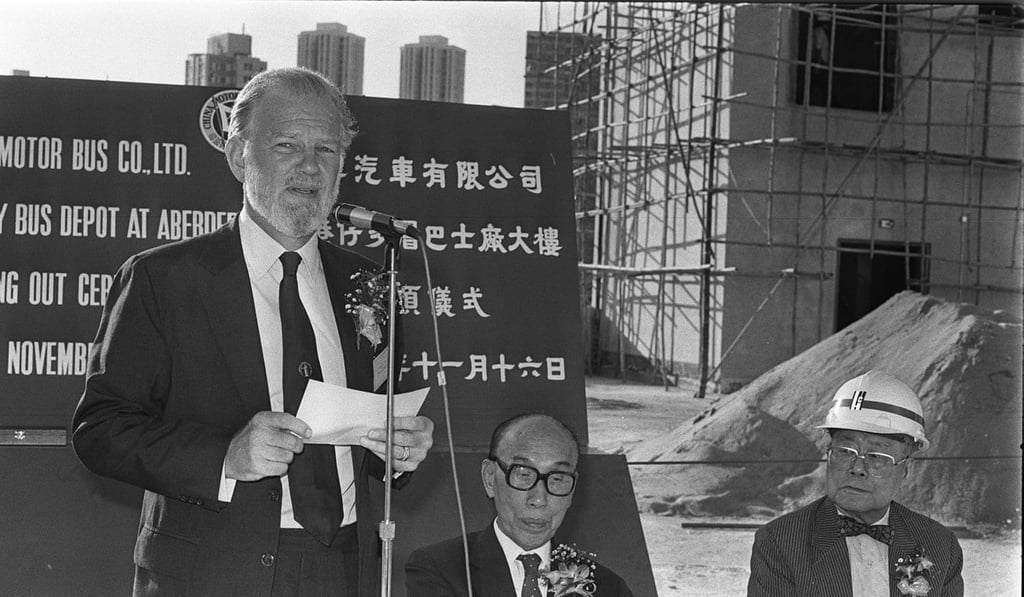
Then secretary for transport Alan Scott speaks at a new bus depot in Aberdeen in 1983. In March that year, Scott announced plans for a pilot scheme on electronic road pricing to fix chaotic traffic problems, but opposition to the idea saw it frozen in December 1985. Photo: SCMP
There are at least two issues with the framing. The first is that electronic road pricing seems to be positioned as a piecemeal initiative, rather than a coherent transport policy that is good for the Hong Kong travelling public as a whole. This creates the perception that the pricing system penalises drivers without concrete benefits (other than easing congestion, which is difficult to grasp).
Advertisement
This brings us to the second issue: there is inadequate articulation of who the beneficiaries of this electronic road pricing are, why they should benefit and what those specific benefits are. With 90 per cent of road journeys taking place on public transport, clearly members of the public who do not travel by private car would benefit. The benefits can be made more specific by reinvesting the funds collected by the road pricing system into improving public transport services (for example, more choices and better frequency) and infrastructure, such as modernising the dilapidated public transport terminuses and, even better, deployment of technology as a smart city.