Advertisement
Hong Kong extradition bill
OpinionLetters

LettersFrance had a grand debate, Ireland a citizens’ assembly. Hong Kong needs its own big public dialogue

  • Citizens’ assemblies have resolved political logjams in several countries by bringing a small but representative group together to deliberate and vote on recommendations. This process might be Hong Kong’s best hope

2-MIN READ2-MIN
French President Emmanuel Macron delivers a nationally televised speech at the Elysee Palace in Paris on April 25 following a series of town halls held across the country to address the concerns of the “yellow vest” protesters. Photo: AFP
Letters
The recent protests against the bill to amend Hong Kong’s extradition laws have reached a deadlock and threaten to spiral out of control. Chief Executive Carrie Lam Cheng Yuet-ngor has been promising dialogue with all sections of society to resolve the crisis, but there is little sign of a public dialogue process as of now. The highly successful citizens’ assembly model could help resolve the current stalemate, as it did so well in the case of Ireland’s decades’ old logjam on its strict anti-abortion law, among other issues.

A citizens’ assembly brings a small representative group of people together to learn, deliberate and make recommendations on issues of public concern. Similar to jury service, members are randomly selected from the population by a process called sortition. Stratified sampling techniques are used to ensure that the assembly is representative in terms of characteristics such as gender, age, ethnicity, education level and geography.

Assembly members learn critical thinking before they hear balanced information from experts and stakeholders. The members spend time deliberating in small, facilitated groups and then draft and vote on recommendations.

Advertisement

Citizens’ assemblies are conducted by non-partisan organisations under independent oversight. They are transparent, inclusive and effective. This model has been used around the world in countries such as the United Kingdom, Canada, France and Australia. They have showed that the general public can understand complex information, deliberate on options, and make fair and impartial choices. Citizens’ assemblies are often used to address issues that are deemed too controversial and difficult for politicians to deal with successfully by themselves.
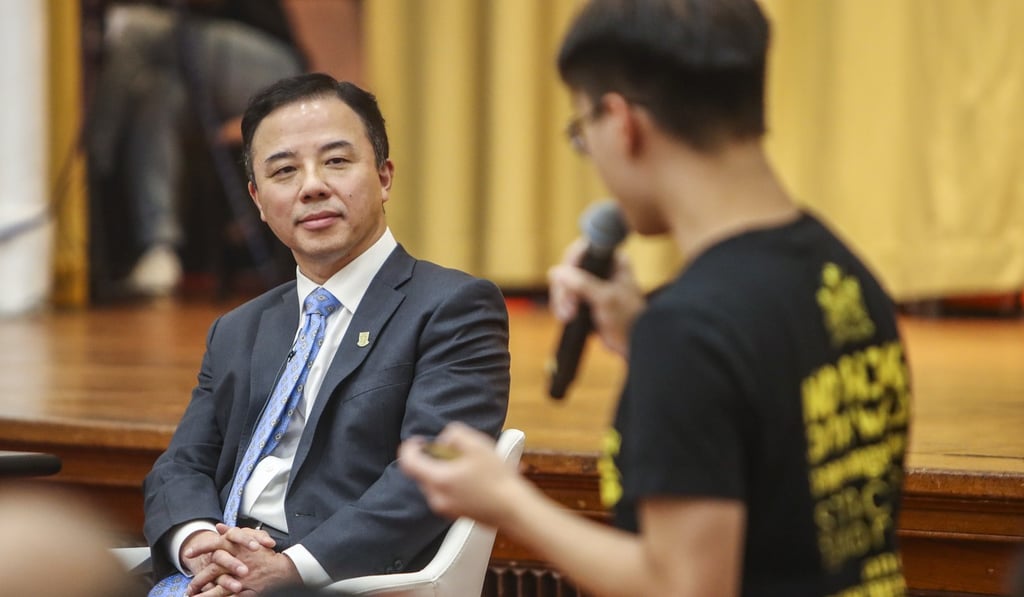
University of Hong Kong president Zhang Xiang listens during a forum with university students and alumni at the university campus in Pok Fu Lam on July 18. Zhang, who previously condemned the July 1 attack on the Legislative Council, admitted to not addressing the frustrations of young anti-extradition bill protesters and called for more dialogue across Hong Kong. Photo: Winson Wong
Advertisement
A good recent example is the effort in France to address the massive “yellow vest” protests against rising unemployment, inequality and social upheavals – all brought to a head by a proposed fuel tax. French President Emmanuel Macron proposed a “great national debate” in response, in an attempt to bring in a form of deliberative democracy, which saw 21 regional citizen’s assemblies with 100 randomly chosen participants meet over 10,000 times.
Advertisement
Select Voice
Select Speed
1.00x