Advertisement
LettersChina coronavirus and Hong Kong protests: are we fighting a disease or the government?
- The use of vandalism and strike threats is self-defeating, politics should not impact public health
- The fight against the coronavirus must not become an extension of the anti-government and anti-mainland protests
2-MIN READ2-MIN

Earlier this week, the Post reported that violent protesters had disrupted railways and promised anti-epidemic action if the government did not close the border in response to the coronavirus. Since when has Hong Kong resorted to vandalism to resolve debates on public health affairs?
It was also reported that medical workers threatened to strike unless the government closes the border. While I understand the trauma of Sars is still fresh, and agree that it is the Hong Kong government’s right and obligation to safeguard the city, political threats – bona fide or not – belittle what Hong Kong used to stand for: humanitarianism and professionalism in times of public (health) crisis.
The irony only gets darker when Hong Kong medical workers threaten to stop saving lives. In comparison, the selfless heroism demonstrated in mainland China among medical workers and volunteers as well as overseas experts truly deserves some serious recognition.

So far, experts have estimated that the fatality rate for the Wuhan coronavirus is lower than the Middle East respiratory syndrome (35 per cent) or Sars (14-15 per cent) viruses. Not to mention Ebola, with death rates up to 90 per cent. But even then, the Hong Kong government did not ban travellers from the affected regions as a preventive measure to block these viruses. So why now?
I fully support taking adequate measures to control the situation, be it self-quarantine for mainland returnees, control over visitors’ numbers or more thorough health screening. But government actions to control the spread of infectious disease are never simply black and white. There are other interests at stake. Unless the government can roll out policies to save the economy, the impact on local businesses must be taken into consideration. Due to months of wanton vandalism and violence, local businesses have already taken a big hit and millions in taxpayers’ money is being spent to repair damage done by violent protesters.
Advertisement
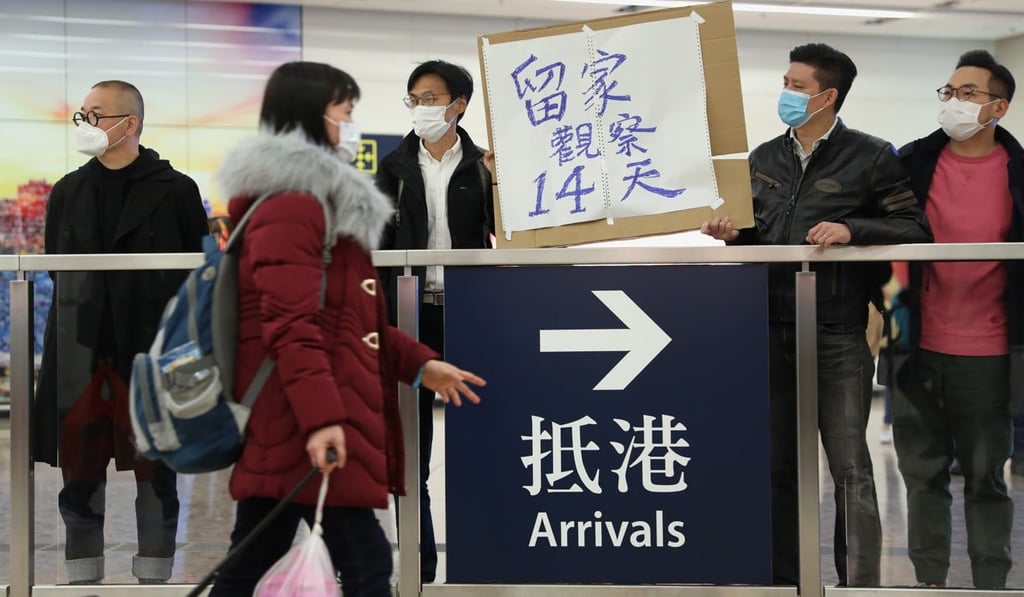
I take issue with the increasing disregard for livelihood issues and the politicisation – in particular, the construction of a dichotomy between the mainland and Hong Kong, the Hong Kong government and the self-proclaimed true Hongkongers – in public debate. What is even more alarming is the stigmatisation of mainland Chinese.
Advertisement
Mainland Chinese visitors are (again) considered unwelcome, seen as bringing in contagious non-local diseases, regardless of whether they have been diagnosed or will comply with all requirements of the Hong Kong government. Perhaps, inspired by the protests, some believe it is in Hong Kong’s interest to reject all mainland influence, without rational deliberation.
Advertisement
Select Voice
Select Speed
1.00x