LettersThree lessons for Hong Kong from MTR station works scandal offer ways to lift city’s engineering sector
- Hung Hom station on the Sha Tin to Central rail link has been ruled safe to use, but the substandard work of the project’s main contractor should be a wake-up call to the government to rely less on foreign companies and help develop local talent instead

Speaking as a professional engineer, the data and evidence presented on large-scale survey, inspections and opening-up are largely clear and reasonable, and I broadly concur with the findings of the commission of inquiry. The station design was conservative to begin with, and the slab-to-diaphragm wall connections contained at least 40 per cent spare loading capacity and passed a finite element analysis on internal stresses.
Besides, the independent experts have considered the station’s intended lifespan of 120 years, as well as extreme scenarios such as the impact of derailed trains on trough walls.
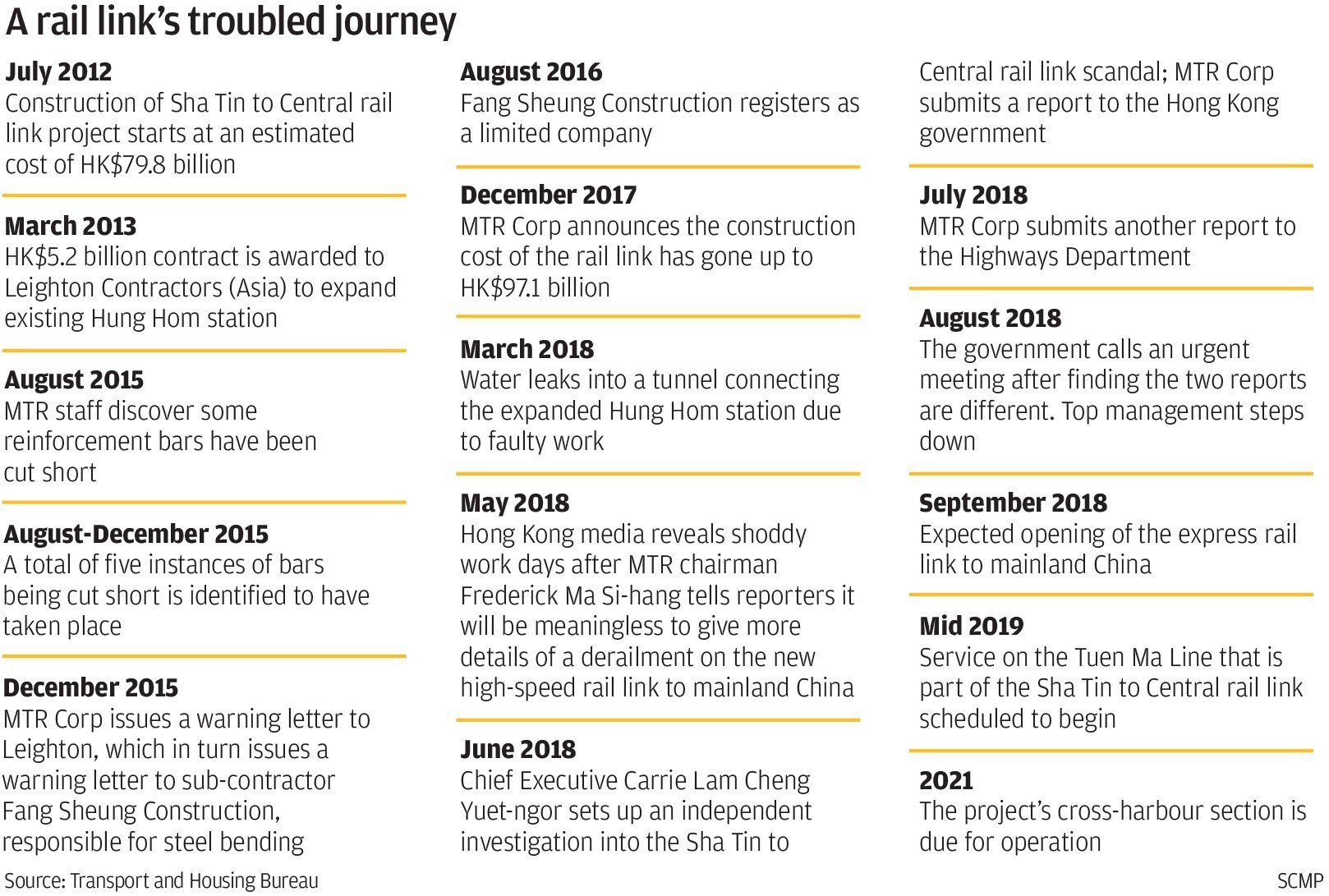
However, while the station is deemed safe, the saga has unearthed troubling issues which the engineering sector cannot ignore, and which I summarise below.
This scandal should be a wake-up call to the government on the pitfalls of over-reliance on foreign companies and the importance of supporting the local industry – through policies and by creating more opportunities for local firms to participate in large-scale projects. This will enable Hong Kong’s construction industry and talent to be firmly established in the city, and eventually set their sights on the global market.