-
Advertisement
Poverty
OpinionLetters

Letters | Fight hunger and malnutrition by rebuilding trust in trade and markets

Reading Time:2 minutes
Why you can trust SCMP
Residents of a slum prepare food to distribute to homeless people in the Copacabana neighbourhood, during a coronavirus disease outbreak in Rio de Janeiro, Brazil, on April 11. Photo: Reuters
Letters
Global progress tackling malnutrition is going backwards, with poverty and economic downturns jeopardising prospects for reaching the Sustainable Development Goals. To reach these targets by 2030, governments must collaborate to ensure trade and well-functioning markets reduce poverty and guarantee food security.

The UN Food and Agriculture Organization estimates some 690 million people are undernourished, with more facing other forms of malnutrition. Despite adequate global food supplies, poverty and inequality prevent millions from accessing sufficient, safe, and nutritious food.
While strong social safety nets can combat poverty, trade can also help raise incomes, create jobs and restore livelihoods. Recent trade tensions between the United States and China have led many to question whether world markets can safeguard food security. Washington’s decision to veto normal processes for settling disputes at the World Trade Organization (WTO) has also undermined trust in how the global trading system functions.
Advertisement
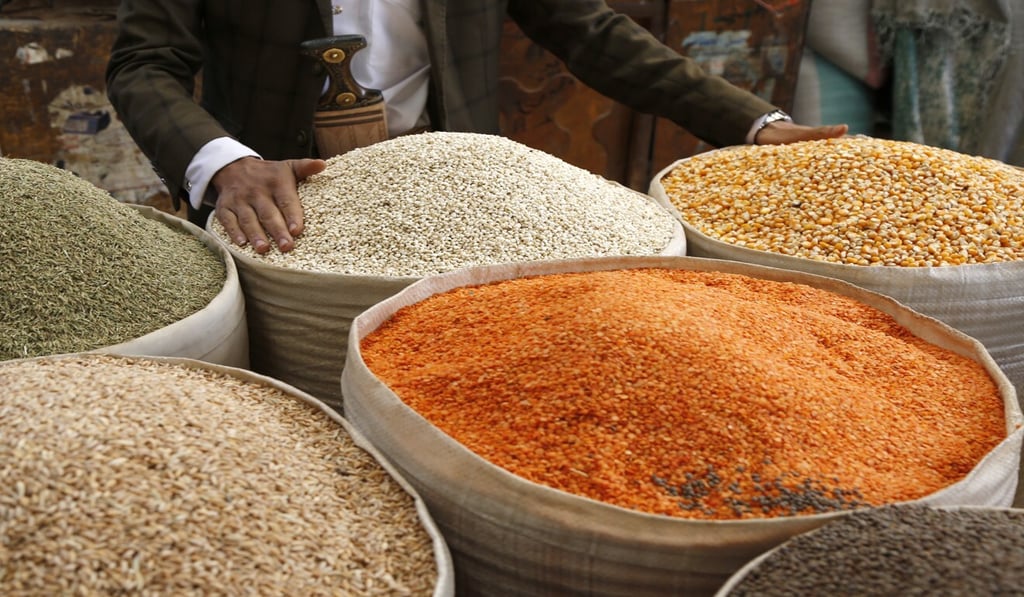
Grains displayed for sale at a market in Sanaa, Yemen, on October 16, World Food Day. Photo: Xinhua

Meanwhile, rising average incomes, urbanisation and changing diets indicate the rate at which food demand is growing is set to outstrip growth in supply across the developing world, meaning trade will become more important in meeting people’s needs. Governments of developing countries will need to raise rural incomes by boosting yields sustainably through policies such as rolling out farmer advisory services or building rural roads.

Advertisement

Governments must also strengthen environmental governance and remove perverse incentives that affect production and consumption patterns for food and agriculture, including tackling fossil fuel subsidies. Furthermore, they should ensure the food system is resilient enough to cope with future shocks, such as more intense and frequent extreme weather that is associated with climate change.

Advertisement
Select Voice
Select Speed
1.00x