Advertisement
Letters | To change the world, teach boys and girls about gender inequality
2-MIN READ2-MIN

Children witness gender inequality at work in their homes and communities every day, whether it is in textbooks, the media or among the adults who care for them. This is a worldwide social issue that has become even more extreme during the Covid-19 pandemic, with more women burdened with unpaid care for young children and the elderly, as more of them lose their jobs than men (“Don’t let Covid push women back to 1950s roles”, December 25).
A McKinsey Global Institute report estimates that women, who make up 39 per cent of the global labour force, have suffered 54 per cent of total job losses from the crisis, leaving them nearly twice as vulnerable to the pandemic’s impact as men.
In far too many countries, girls already receive fewer opportunities than boys for schooling. Women do about 75 per cent of the world’s total unpaid care work, rising to as high as 80 to 90 per cent in regions such as South Asia, the Middle East and North Africa. Discriminatory teaching practices and education materials also produce gender gaps in learning and skills development.
Advertisement
Unicef reports that nearly one in four girls between the ages of 15 and 19 are neither employed nor in education or training, compared to one in 10 boys. This shows the social injustice towards girls that is ingrained in human societies.
In its most insidious form, gender inequality turns violent. Stuck at home during the pandemic, women and children are vulnerable to domestic violence. In times of both peace and conflict, adolescent girls face heightened risks of gender-based violence.
02:40
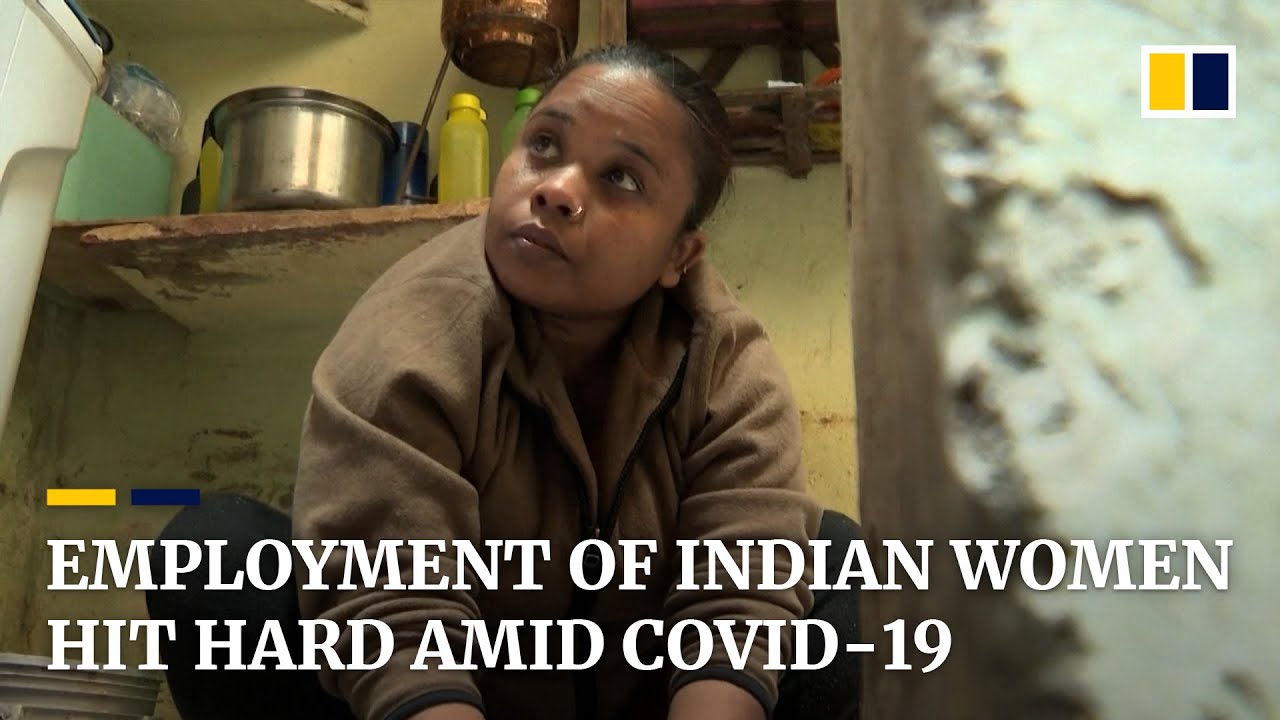
Indian women’s employment hit hard as India’s coronavirus caseload tops 10 million
Indian women’s employment hit hard as India’s coronavirus caseload tops 10 million
Hundreds of millions of girls worldwide are still subjected to child marriage and female genital mutilation, even though both have been recognised as human rights violations. Violence can occur at birth, such as in places where female infanticide is known to persist.
Advertisement
Select Voice
Select Speed
1.00x