Advertisement
Letters | Chocolate or instant noodles: a pinch of guilt is good
- Eating guilt-free is not just for health reasons. Deforestation and child labour may be behind the palm oil and cocoa in instant noodles and chocolate
Reading Time:2 minutes
Why you can trust SCMP

Susan Jung (“For a true foodie, there are no guilty pleasures”, May 21) makes the argument that one shouldn’t feel guilty about eating any foods, provided that eating what you want does not harm anyone else. We would certainly agree with that, but fear that many are unaware of the harm that a variety of foods can cause.
For instance, about 20 per cent of instant noodles is palm oil and palm oil plantations are notorious for causing deforestation and thus global warming.
Hong Kong is one of the world’s top importers of Brazilian beef, but the beef industry in Brazil is responsible for widespread destruction of the Amazon rainforest and displacement of indigenous people. Few consumers may be aware of these facts.

03:43
Indonesian women in palm oil industry abused and exploited
Indonesian women in palm oil industry abused and exploited
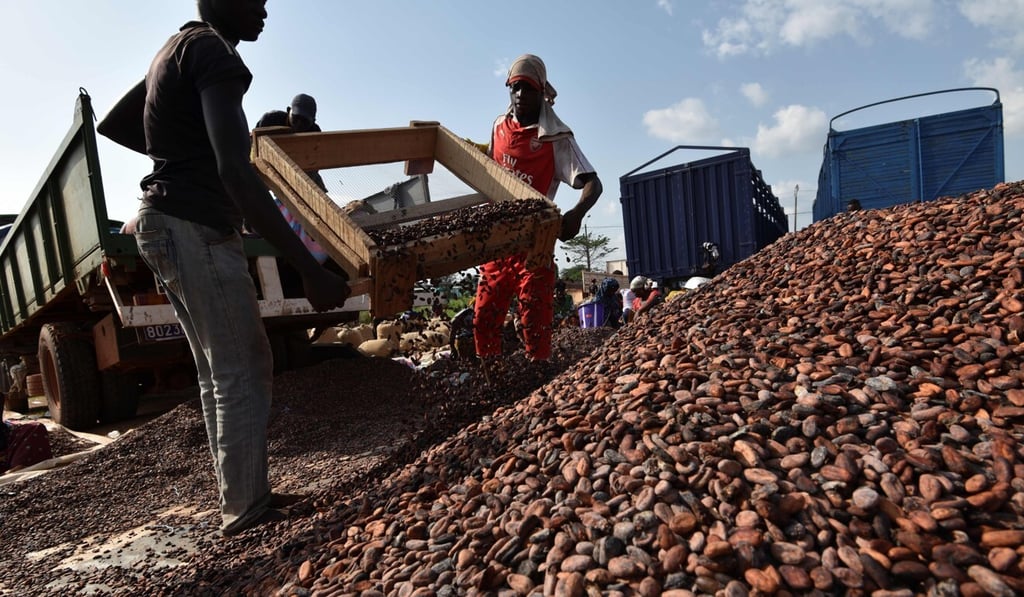
Even fewer people are aware of the harm caused by the mainstream chocolate industry. Most of the world’s cocoa is grown in West Africa, in particular the Ivory Coast. All major chocolate manufacturers, including luxury brands, source cocoa from West Africa because of lower costs. Just to be clear, cocoa does not grow in temperate climates, so “Swiss”, “French”, “Belgian”, “UK” and “US” chocolate, for example, usually contains West African cocoa.
Advertisement
In the Ivory Coast, cocoa farming has resulted in the loss of almost all the rainforest that once covered much of the country. This is not necessary, as cacao trees will grow well within rainforests (a system known as agroforestry).
Advertisement
Furthermore, the cocoa industry in West Africa is notorious for the use of child labour and child slave labour on plantations. Major chocolate companies pledged in 2001 to eliminate child labour in their supply chains but, 20 years later, this has yet to be achieved. Indeed, it was estimated that in 2018 there were as many as 2.1 million child labourers on cocoa plantations in West Africa.
Advertisement
Select Voice
Select Speed
1.00x