Advertisement
Animals
OpinionLetters

Letters | Hong Kong’s wild boar cull raises larger questions about protection of biodiversity

  • The government’s decision to kill boars in urban areas should prompt reflection on whether human beings’ relationship with animals can be more than just predator-prey, especially as climate change threatens the city’s biodiversity

Reading Time:2 minutes
Why you can trust SCMP
A wild boar noses its way around Mount Parker Road Green Trail in Tai Tam Country Park on July 27. Photo: Nora Tam
Letters
Seven wild boars were captured and euthanised by the authorities in Hong Kong on November 17, sparking discussion in the city. The government says these operations are undertaken to ensure the safety of residents.
Apparently, the boars were not included among the “residents”, despite having settled in the city for centuries. Can humans’ relationship with animals be more than just predator-prey?

Hong Kong is small and densely populated, but not many are aware that the city is incredibly rich in biodiversity. The city is home to 3,300 plant species, 55 terrestrial mammal species, 115 amphibian and reptile species, 193 freshwater fish species, 129 dragonfly species and 245 butterfly species. The 550 bird species recorded in the city represent one-third of the total in China.

Advertisement

Occupying only 0.03 per cent of the marine area of China, the city accounts for 26 per cent of marine species recorded in China. With 84 hard coral species, Hong Kong has a higher coral diversity than the Caribbean Sea.

Given these facts, it might not be surprising that Hong Kong has for three consecutive years stayed in the top three positions in the City Nature Challenge, an annual global challenge to document urban biodiversity.
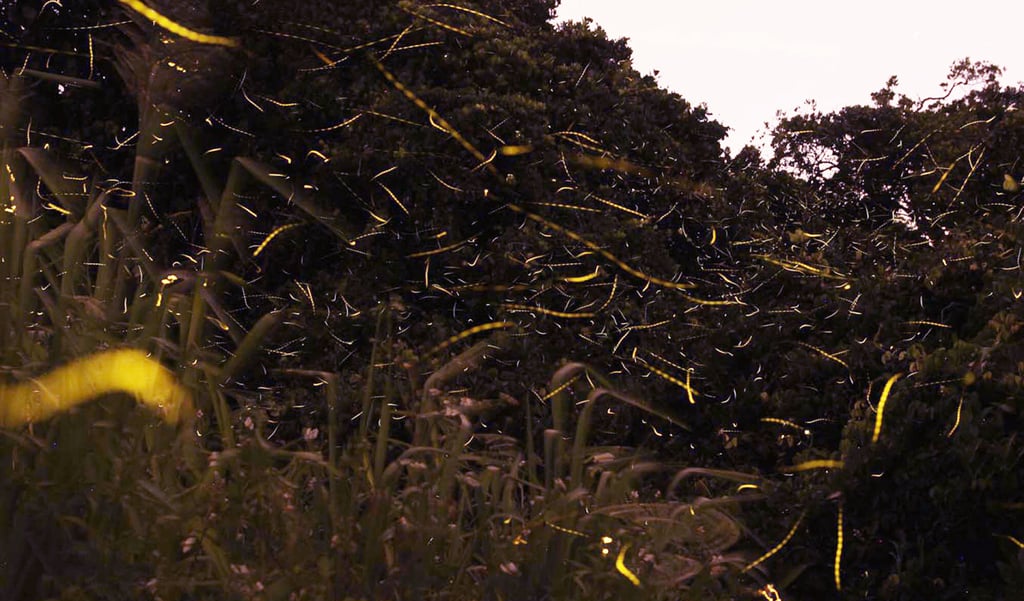
The Mai Po bent-winged firefly is a species unique to Hong Kong’s Deep Bay. Photo: HK Entomological Society
However, what is more challenging is whether the city can protect its unique species and preserve biodiversity amid the global climate crisis. For example, warmer winters in Hong Kong due to climate change impact the breeding season of the “near threatened” Hong Kong warty newt; sea level rise may threaten the growth of mangroves and destroy the habitat of the Mai Po bent-winged firefly, a species unique to Deep Bay.
Advertisement
Select Voice
Choose your listening speed
Get through articles 2x faster
1.25x
250 WPM
Slow
Average
Fast
1.25x