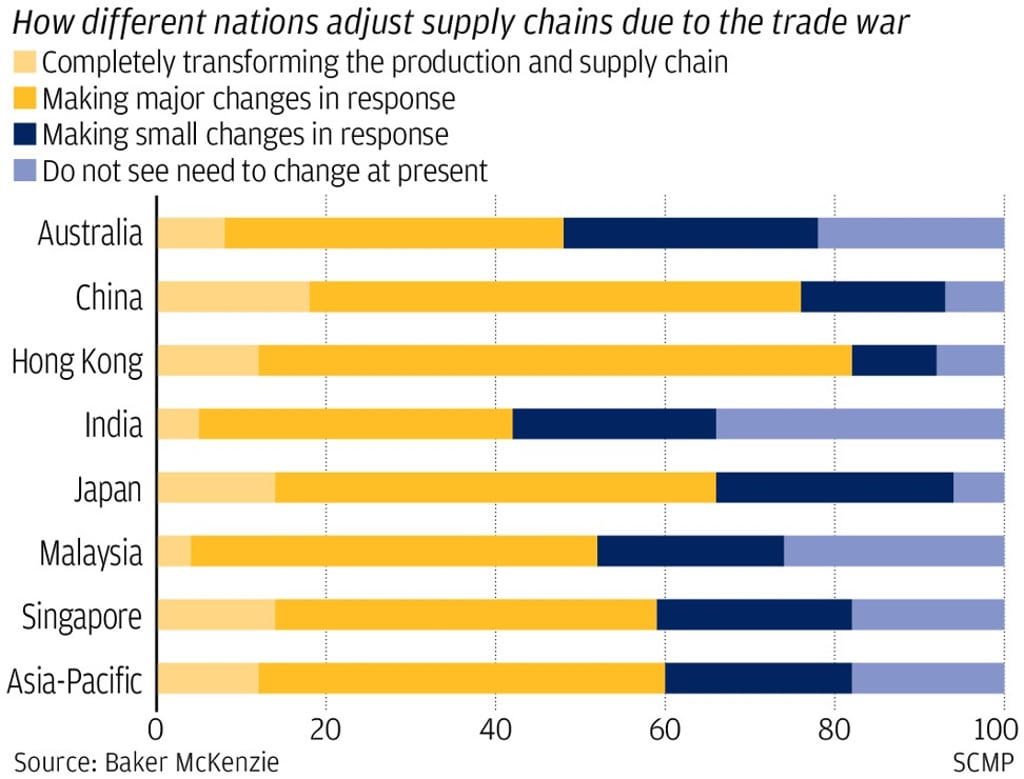
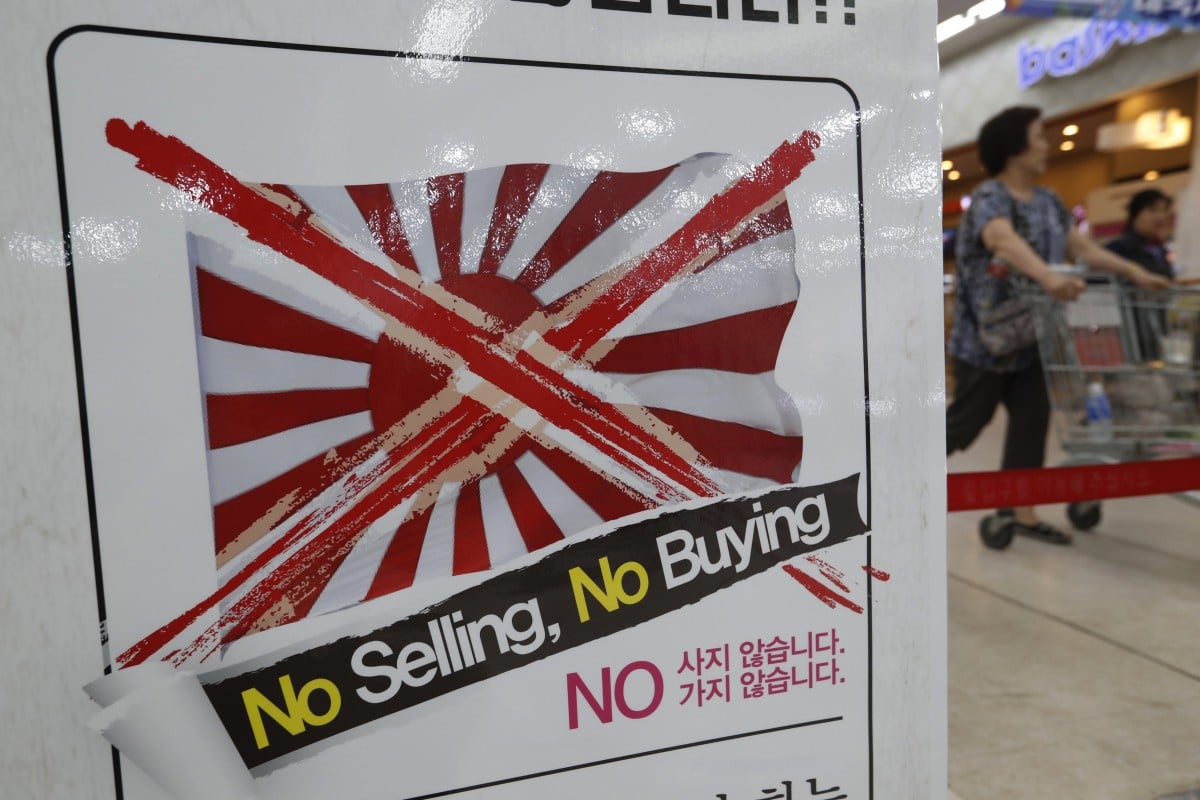
Japan and South Korea enter the fray of a growing war on not just trade, but also global supply chains
- Under attack, the previously underrated and ignored supply chain, essentially the nervous system of international trade, is starting to deliver painful shocks throughout the global economy
Few people seem to take the threat to supply or value chains as seriously as they should, which is due largely to the hidden nature of these myriad and vital links among countries and companies across Asia and beyond. They are the nervous or vascular system of the global economy, unseen and unheeded until they malfunction.
Mercifully (even if maybe rather late in the day), some senior economists are beginning to sound the alarm, although at a time such as this, when ignorance is regarded as bliss among populist political leaders, rational voices are rather easily drowned out.
The damage to supply chains goes far beyond the impact on Huawei. Supply chains comprise myriad companies, from giants like Huawei and legions of other multinationals, to tens (or maybe hundreds) of thousands of smaller firms, all of which have invested years, even decades in building the international trading system as we know it.