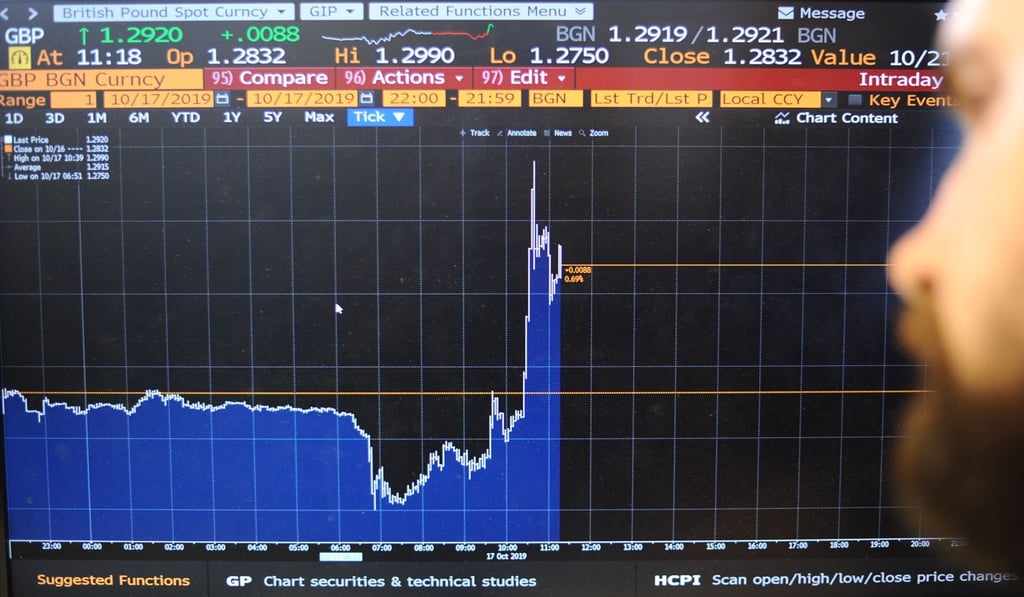
The Fed thinks the US-China trade war and Brexit risks have receded. Investors should avoid making the same mistake
- Investors have shown a tendency to swing between extremes, reacting to news with excessive bearishness or bullishness. It’s jarring to see the Fed do the same, ruling out more rate cuts because of fleeting progress in Brexit and the trade deal

As recently as October 8, the benchmark S&P 500 equity index was down 4.5 per cent from its peak in late July. The yield on 10-year US Treasury bonds, meanwhile, was trading just a whisker above its record low set in July 2016.
Since then, both indicators have risen. The S&P 500 is up 5.3 per cent, while the 10-year Treasury yield has increased almost 25 basis points. These moves are by no means exceptional, particularly in the context of the volatility that has pervaded financial markets since the start of 2018.
Yet, from the standpoint of market psychology, they amount to a marked shift in sentiment at a time when fears about a global recession – including America, whose economy is still in relatively good shape – are rife.
In a sign of the extent to which sentiment has improved, the US dollar, one of the best gauges of perceived risk, has fallen since the end of September. The dollar index, a measure of its performance against a basket of other currencies, is down 1.7 per cent, having risen 3.3 per cent in the third quarter.