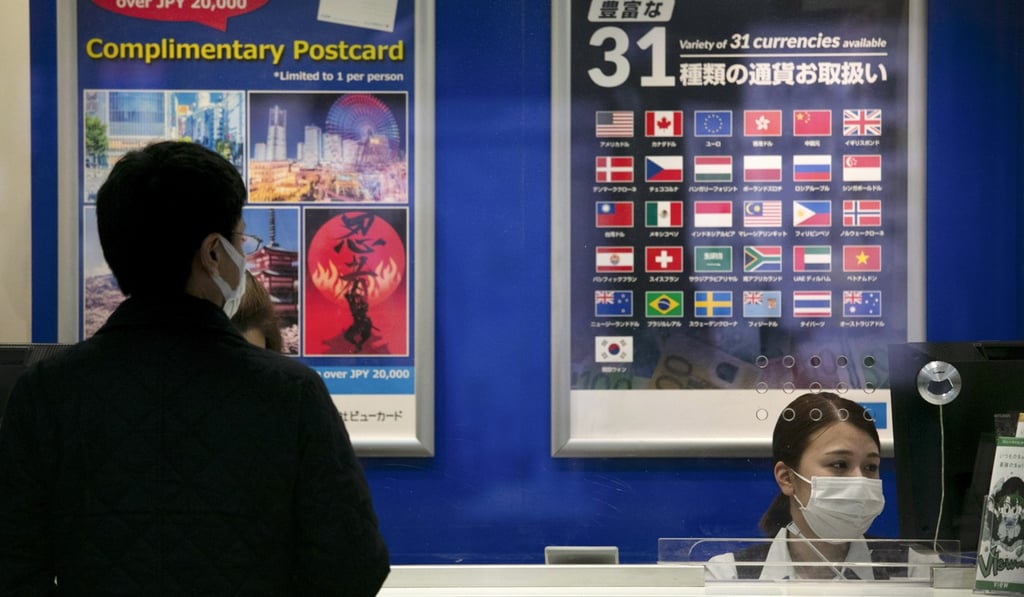
Why coronavirus-fuelled yen strength is not an indication of Japan’s economic health
- Last week’s jump reflects the unwinding of yen-funded long positions in US equities, not confidence in the Japanese economy or currency
- Coronavirus-related disruption to global supply chains and a drop in tourism will hit Japan’s economy hard

Japan’s currency performed well last week, a “safe haven” beneficiary of tumbling equity market prices amid investor concerns about the global spread of Covid-19. Yet Japanese economic fundamentals hardly justify a stronger yen. In fact, Japan’s economic plight may well be worsening.
By definition, exiting a long position in US equities produces US dollars. But if the original US equity purchase was funded in yen, taking advantage of the very low funding costs associated with the Japanese currency, fully unwinding the position will also involve reacquiring that yen as well as selling the US equity.
When a host of investors, all acting rationally in the face of the evidence, perform this type of unwind, as occurred last week, then demand for the yen itself achieves critical mass and the foreign exchange rate moves in the Japanese currency’s favour.
But that’s a trade unwind, albeit on a massive scale, not a sign of confidence in Japan or indeed its currency.