Advertisement

Inside Out | Failing to heed IMF’s warnings of economic gloom will cost the world dearly
- Despite optimism in some sectors, the prevailing message during the IMF’s spring meetings was one of gloom, concern and the need for urgent action
- The projected massive rise in spending needs is neither being budgeted for nor acknowledged as many governments appear unwilling to listen
Reading Time:4 minutes
Why you can trust SCMP
2

At the start of last week’s International Monetary Fund spring meetings, the Financial Times stated chirpily: “Global economy dodges big slowdown as growth outlook outpaces forecasts”, citing its Brookings-FT tracking index as signalling a rise in consumer and business confidence.
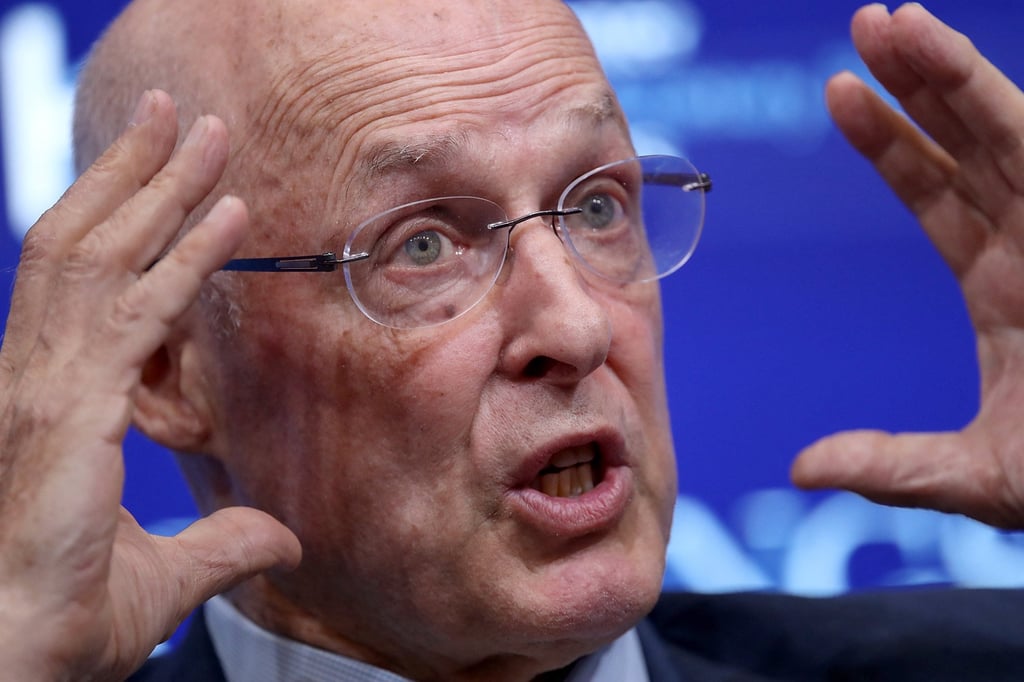
But, as each day passed, the IMF reported unrelenting gloom during its meetings, leaving the tracker looking progressively more Panglossian. The book-ender on Saturday was Henry Paulson, former US Treasury secretary who wrestled with the 2008 global financial crash: “I think it’s pretty likely we will see a recession if you look at what’s happening to credit,” he warned.
“What we know is that if you’re running a small or regional bank right now, you wouldn’t be lending … In the past couple of weeks you’ve had US$300 billion of deposits move out of the banking system, maybe a trillion since the beginning of the year … There is uncertainty, and more to come.”
Advertisement
If the gloom of Paulson and the IMF was confined to turmoil in the banking sector, the FT’s unwarranted optimism might have been more easily swallowed. But, from the IMF’s World Economic Outlook to its Global Policy Agenda and Global Financial Stability Report, and the week’s open discussions, the IMF’s week-long drumbeat was unrelentingly dark.
Its forecast for global economic growth has slipped to 2.8 per cent, with advanced economies likely to see an anaemic 1.3 per cent. While it sees recovery to 3 per cent in 2024, growth will be stuck at that level for the coming five years. Inflation remains stuck above 7 per cent, which means interest rates might still have to rise further and stay high longer.
Capturing the prevailing gloom, the IMF said this was the weakest medium-term outlook since 1990, with risks “skewed heavily to the downside” while the chances of a hard landing had “risen sharply”. Chief economist Pierre-Olivier Gourinchas said its long-term forecasts showed “a dire trend”, revised downward continuously since the 2008 crash. The world’s sustainable growth rate has fallen from 5 per cent in 2008 to just 3 per cent today.
Advertisement
Select Voice
Choose your listening speed
Get through articles 2x faster
1.25x
250 WPM
Slow
Average
Fast
1.25x