Advertisement

Macroscope
Why Warren Buffett could regret TSMC sell-off amid Taiwan geopolitical tensions
- Not only is TSMC hugely profitable, it is growing exceptionally fast and has a virtual stranglehold on the global semiconductor supply chain
- Sentiment towards TSMC remains bullish, thanks in part to the firm’s strong fundamentals and relatively cheap shares from a geopolitical discount
3-MIN READ3-MIN
2

Nicholas Spiro is a partner at Lauressa Advisory, a specialist London-based real estate and macroeconomic advisory firm.
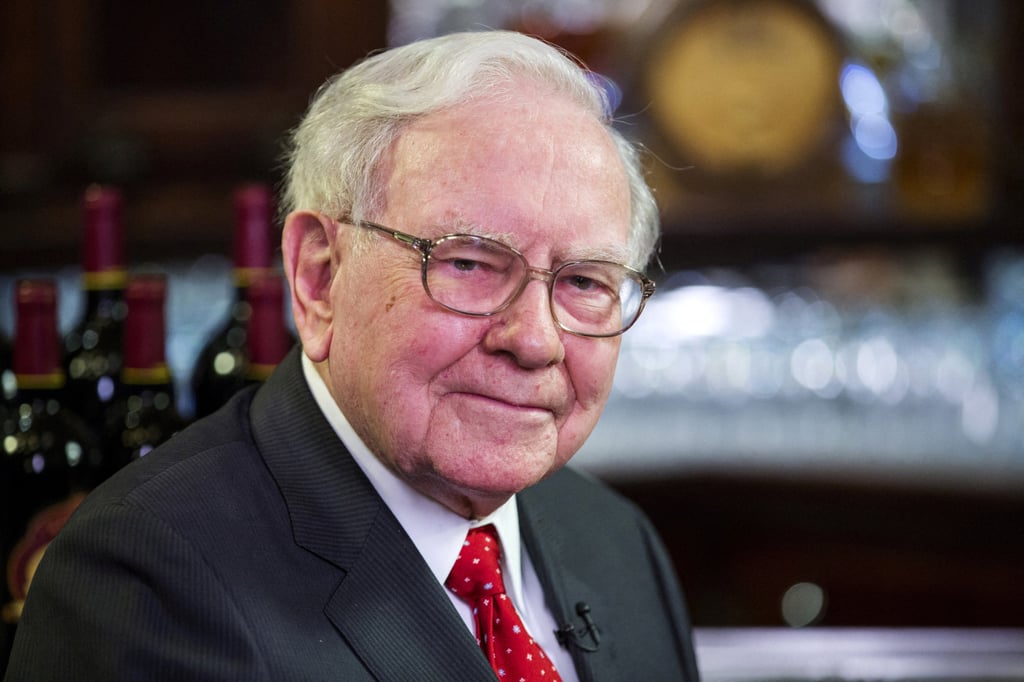
Warren Buffett, who is famed for his unswerving focus on business fundamentals, knows a successful company when he sees one. While the track record of Berkshire Hathaway, Buffett’s conglomerate, is patchy in the technology sector, its big investment in Apple – which it began buying in 2016 – has paid off handsomely.
When Berkshire revealed last November that it had purchased a US$4.2 billion stake in Taiwan Semiconductor Manufacturing Company (TSMC), the world’s largest contract chip maker, this seemed like a smart move for a long-term investor focused on companies’ underlying value.
Not only is TSMC hugely profitable, it is growing exceptionally fast and has a virtual stranglehold on the global chip supply chain. Beijing relies on the Taiwanese semiconductor giant to furnish it with 70 per cent of the chips needed to power its consumer electronics sector. The United States, meanwhile, depends on TSMC to produce more than 90 per cent of the most advanced chips designed by its leading semiconductor companies.
Advertisement
Yet, no sooner did Berkshire disclose its stake in TSMC than it revealed that it had reduced its holding by more than 85 per cent. Earlier this month, Buffett said the decision was because of a reassessment of geopolitical risks as opposed to misgivings about TSMC’s business.
While the abrupt sale was uncharacteristic of Berkshire’s buy-and-hold investment strategy, it accentuated concerns about the economic fallout from one of the world’s most dangerous geopolitical flashpoints. Although Taiwan is straddling the fault line of a tech cold war between Washington and Beijing, pressure on the island increased sharply following the eruption of the Covid-19 pandemic.
The combination of acute supply chain disruptions, the downturn in the semiconductor industry and the severe escalation in tensions across the Taiwan Strait following Russia’s invasion of Ukraine has made it increasingly difficult for TSMC to manage the geopolitical divide.
Advertisement
Select Voice
Select Speed
1.00x