Advertisement

Macroscope
Why a Brics plus Belt and Road Initiative is what the world needs
- China’s grand infrastructure initiative needs wider ownership, a stronger institutional structure and more money. It could gain these if it were incorporated into the newly enlarged Brics grouping
3-MIN READ3-MIN
8

Anthony Rowley is a veteran journalist specialising in Asian economic and financial affairs.
What if the Brics nations – the grouping that until last year comprised Brazil, Russia, India, China and South Africa – were to formally adopt the China-led Belt and Road Initiative and make it a joint international project with an institutional structure and an international headquarters?
If this were launched at the annual summit of the enlarged Brics group – which now includes Egypt, Ethiopia, Iran, Saudi Arabia and the United Arab Emirates – in October in the Russian city of Kazan, it would serve as a powerful symbol of China-Russia and Global South economic cooperation.
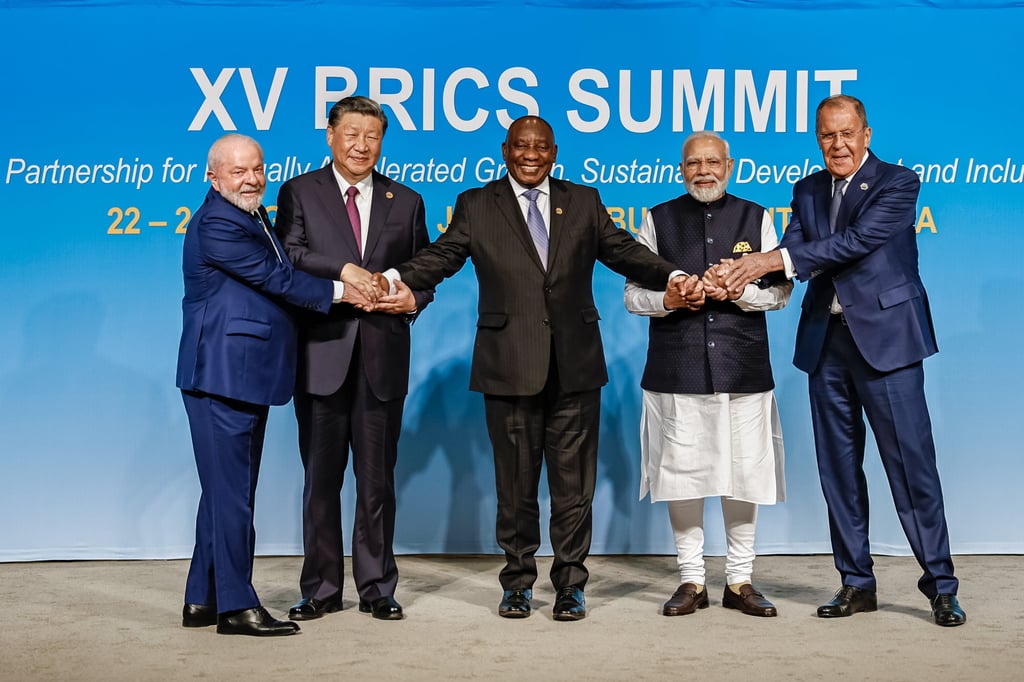
Chinese President Xi Jinping, a leading proponent of enlarging Brics, suggested before the decision to admit new members was announced at the group’s summit in Johannesburg in August last year that admitting new members would give Brics the grouping a greater voice on the world stage.
That voice could be amplified considerably if the grouping were to take on the role of a global infrastructure power by integrating the functions of the Belt and Road Initiative into its trade and investment capabilities, amplifying the initiative’s geographical and strategic reach.
The Belt and Road Initiative needs three things to give it new impetus: wider ownership, a stronger institutional structure and, of course, more money. All these could be achieved by making it an organ of the Brics group which is gaining increased international credibility.
This might all sound rather speculative but there is sound geographical and economic logic behind the idea. Ocean-borne commerce is becoming more risky with new war fronts opening up in key parts of the Middle East and flashpoints heating up in Asia, making overland routes look attractive by comparison.
Advertisement
Select Voice
Select Speed
1.00x