Malaysia art show demystifies conflict in southern Thailand, illustrating life under martial law and drawing on region’s history
Patani, Yala and Narathiwat, mainly Muslim, Malay-speaking provinces in Buddhist majority Thailand, are the focus of an exhibition in Kuala Lumpur prompted by the curiosity of curators from the north of the country

The insurgency in Thailand’s southern provinces bordering Malaysia is one of the least understood conflicts in Southeast Asia. While people in the region are aware of the Patani insurgency, as some call it, it is poorly reported on and explained.
An exhibition by artists from those provinces, and from northern Malaysia, sheds light on life under martial law in the predominantly Malay-speaking region.
The exhibition, “Patani Semasa”, which roughly translates to Present Patani, introduces Malaysians to a region many know little about. It is running at the Ilham Gallery in the Malaysian capital, Kuala Lumpur, until July 15.
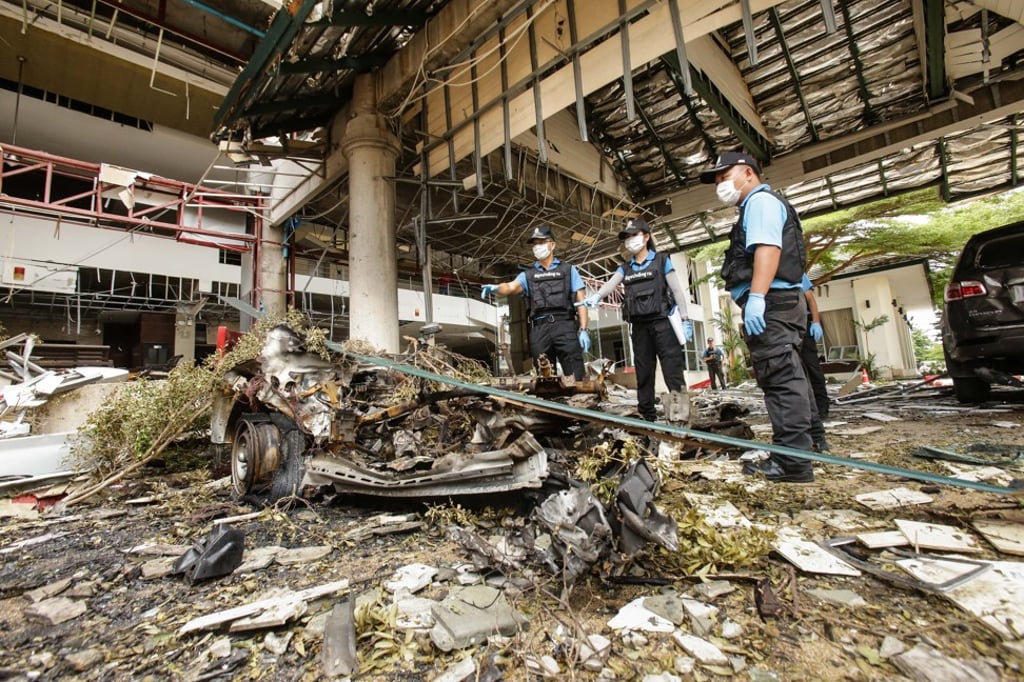
The exhibition is the brainchild of curators from the Maiiam Contemporary Art Museum in the northern Thai city of Chiang Mai. They wondered what kind of art was emerging from the troubled “deep south” of the country. Rahel Joseph, director of the Ilham Gallery, says the project began with the Maiiam curators visiting the area and its artists.
“What’s so valuable about this show is that it’s so well researched and well curated,” Joseph says. She says the curators looked beyond the current state of affairs in the area to its history as part of the Langkasuka kingdom, and its relationship to the rest of Southeast Asia.
The exhibition features 28 young artists, most of whom have lived and worked in Thailand’s deep south.