Advertisement
Ai Weiwei
Culture

Chinese activist artist Ai Weiwei visits elephant camps in Myanmar to raise awareness of jobless logging elephants in crisis

There are almost 5,000 working elephants in Myanmar, more than half employed by state-run Myanmar Timber Enterprise to haul hardwood trees. However, an export ban put 1,000 elephants out of work. Some were killed, others were abandoned or sent to neighbouring countries

Reading Time:2 minutes
Why you can trust SCMP
Elephants in Myanmar working in the country’s timber industry, dragging heavy fallen trees to rivers for shipping. Photo: AFP
Kylie Knott

Chinese artist Ai Weiwei has carved a career out of controversy and activism, the dissident artist’s works that touch on subjects from human rights to corruption often raising the ire of the Chinese government.

Now the Berlin-based artist is getting his hands dirty for another cause. His latest passion project is all about the pachyderm, more specifically Myanmar’s “jobless” working elephants.

Last week Ai Weiwei visited several elephant camps in the country as part of a mission with animal welfare group, Four Paws. According to the Vienna-based organisation, about 2,900 of the almost 5,000 working elephants in Myanmar belong to state-owned enterprises, mostly the Myanmar Timber Enterprise. The rest are in private hands.
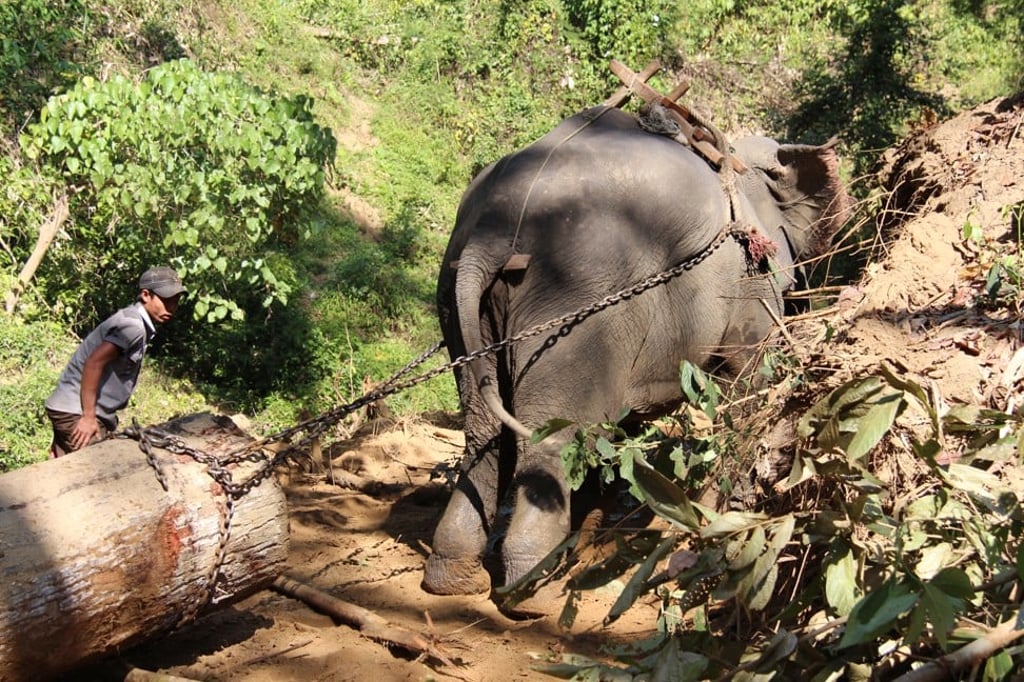
But Four Paws says the elephants that were once held in high regard in Myanmar, home to the world’s largest captive elephant population, are in crisis. For hundreds of years the beasts helped remove hardwood trees, especially teaks, from the country’s hard-to-access jungles, the timber playing a vital role in shaping the country – equipping the British imperial fleets, and after the country’s independence in 1948, when it was the second-highest source of exports for the military dictatorship.
Advertisement
Elephant logging in Myanmar in 2014. Photo: courtesy of Four Paws.
But in April 2014, Myanmar bowed to pressure from environmentalists and introduced a one-year ban on raw timber export for the 2016/17 financial year, saying it would also reduce logging after that, as the country a bid to curb deforestation (A report by the United Nation’s Food and Agriculture Organisation found Myanmar lost 19 per cent, or 7,445,000 hectares of forest between 1990 and 2010).

While a good move for the environment, the ban put about 1,000 elephants out of work. And according to Four Paws, many of those elephants have been abandoned, killed, or smuggled to neighbouring countries where they are being exploited in the tourism industry.
Advertisement
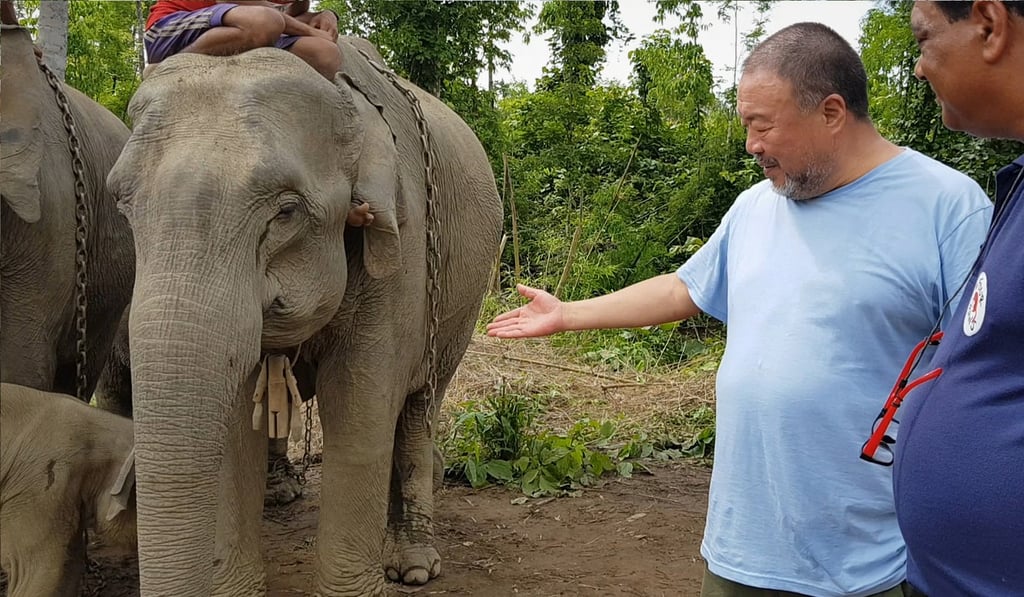
Chinese artist Ai Weiwei visits elephants in Myanmar in 2018. Photo: courtesy of Four Paws
“I am so sad to see that. Elephants are quite similar to human beings, they are intelligent and emotional creatures,” says Ai in a video provided by Four Paws. “Unfortunately, elephants have been placed in these conditions by humans. This is not right and not fair. Elephants deserve to live in freedom, but they have always been mistreated. If I could I would wish to release them immediately. They are born to be free and not captive like this. Let the elephants be free!”
Advertisement
Select Voice
Choose your listening speed
Get through articles 2x faster
1.25x
250 WPM
Slow
Average
Fast
1.25x