Actors and activists fight for endangered green sea turtles’ nesting site in Hong Kong
Sea turtle numbers are dropping globally due to pollution, plastic and trash in their egg laying areas. Actress Sharon Kwok and other activists are calling on the government to protect the only regular nesting site in Hong Kong

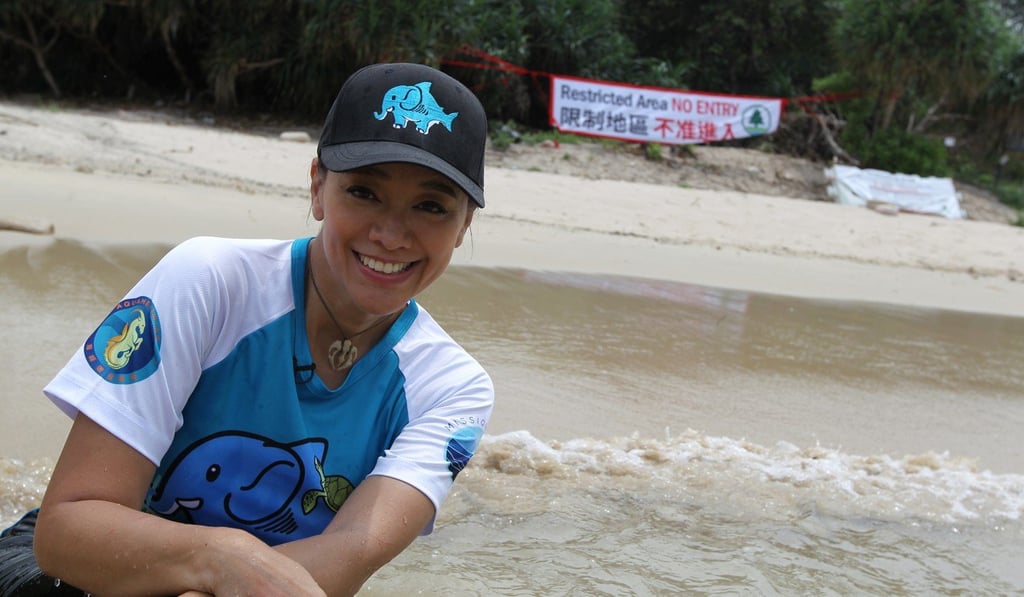
Actress-turned-activist Sharon Kwok Sau-wan, wearing the blue shirt of environmental group Aquameridian Conservation & Education Foundation that she co-founded in 2013, grabs the boat’s rail as it slices through the bumpy waters towards Hong Kong’s outlying Lamma Island.
“That rock over there, the big one balancing on that cliff, it’s called turtle rock. It’s such a crazy coincidence that it looks like a turtle,” says Hong Kong-born Kwok, as we enter Sham Wan on the south side of the island.
Coincidental because the 0.5 hectare stretch of sandy beach at Sham Wan is the only regular nesting site for endangered green sea turtles in Hong Kong. Sadly, the nestings have been anything but regular, with the last nesting recorded at the beach in 2012, although there was a glimmer of hope last year when a turtle was spotted swimming in the bay.
Hong Kong once had a healthy population of green sea turtles (Chelonia mydas), the only sea turtle species known to breed in Hong Kong and China. But numbers have dropped drastically in recent years (see table below).
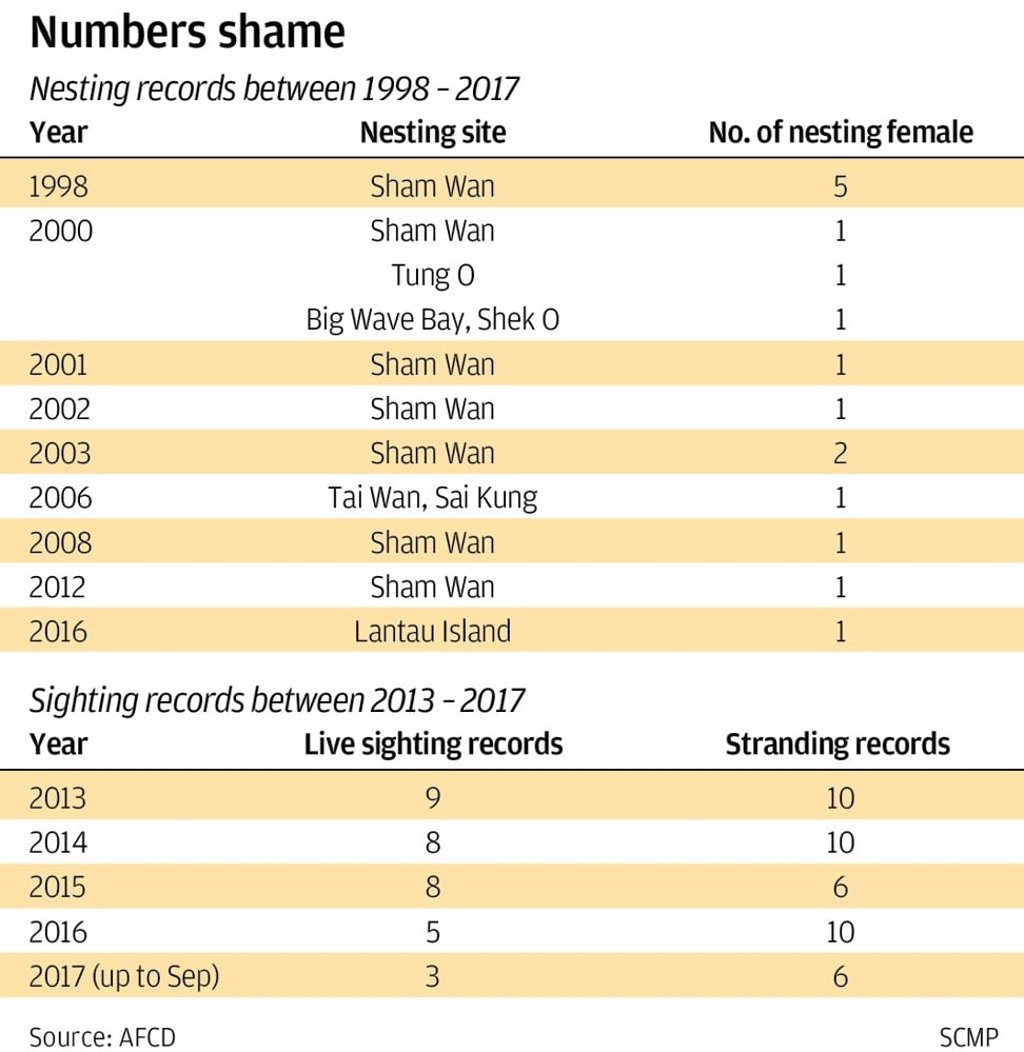
Green groups agree the government needs to do more to protect the species. Some steps have been taken. In 1999, the government introduced measures to close the beach from June 1 to October 31, the turtles’ nesting season. However the protected area covers only the dry sand above the high water mark and not the bay or shallow waters. Environmentalists want that changed. They are calling for the protected area to be expanded to include the shallow and deep waters – “the entire bay”, says Kwok.