Tiles to restore corals, designed and 3D printed in Hong Kong, may be key to saving the world’s threatened reefs
- In a world first, University of Hong Kong marine institute scientists lay clay tiles in marine park where coral was wiped out in twin ecological catastrophes
- Seeded with living corals, the tiles quickly increased biodiversity. If found to work, they could transform reefs damaged by pollution, fishing and bleaching

It remains a mystery to scientists why large swathes of coral in Hong Kong waters suddenly died in March 2015. Hoi Ha Wan Marine Park in Sai Kung district alone lost 90 per cent of its population of Platygyra, one of the main local coral types, and then another mass die-off followed in 2016.
Surveys conducted by the Hong Kong government’s Agriculture, Fisheries and Conservation Department found that considering the extent of the loss, natural regrowth would take an extremely long time.
“We may have to wait for a hundred years for a degraded coral community to return and become self-sustaining,” explains Vriko Yu, a doctoral candidate at the University of Hong Kong.
So departmental officials decided to take active measures to protect the marine invertebrates, commissioning and funding the university’s Swire Institute of Marine Science to initiate a coral restoration programme.
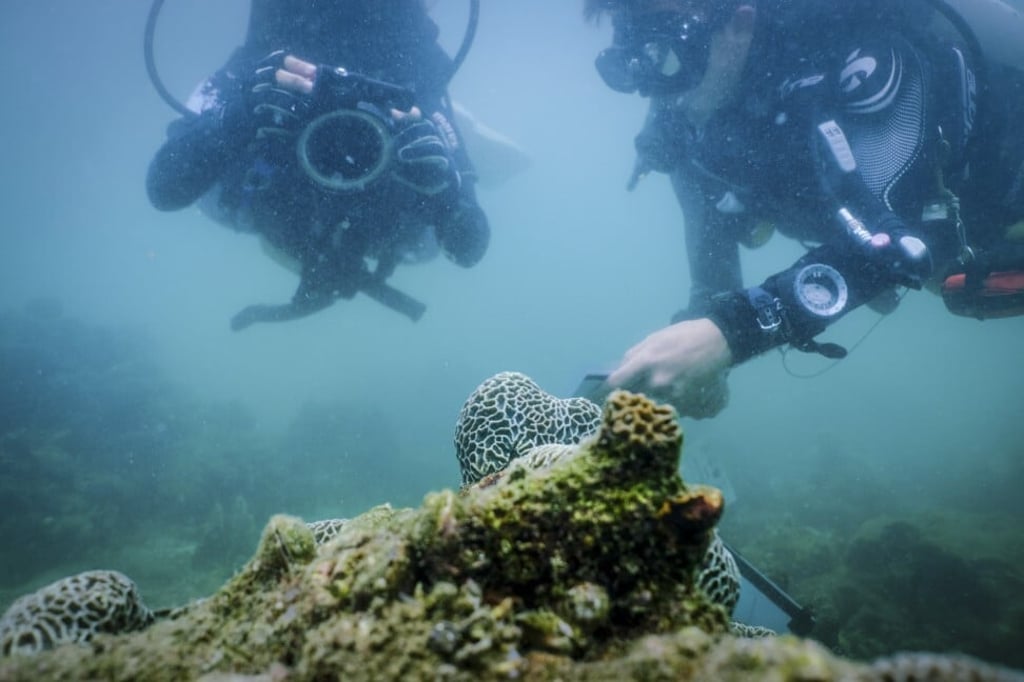
The programme was launched in 2016 and is managed by Yu. Just as a woodland can be reforested, so can a reef, and the institute’s team began replanting corals.
Initially, the scientists glued living coral fragments directly onto rocks. But corals grow slowly, and left alone it would take them decades to increase to a size large enough to provide new habitats for other sea creatures – a crucial role of corals in the ecosystem.